Skip to content

Mandatory carpet cleaning clauses is a practical distinction that can affect tenancy check-out discussions in London. Moving out of a rented property in London can be stressful, particularly when reviewing tenancy agreement clauses demanding compulsory professional cleaning. Many tenants wonder if a landlord or letting agent can legally force them to pay for professional carpet cleaning at checkout.
The Legal Reality of Carpet Cleaning Clauses in London Tenancies
For decades, standard Assured Shorthold Tenancy (AST) contracts across London routinely contained standard clauses stating that carpets must be professionally deep steam cleaned at the end of the tenancy, with paid invoices provided as proof. However, legislative reforms have significantly changed how these agreements operate in practice.
Under the Tenant Fees Act 2019, landlords and letting agents in England cannot legally enforce compulsory fees or mandate third-party commercial services as a condition of tenancy. A clause that attempts to force a tenant to contract a professional cleaning company—regardless of the actual condition of the carpet—is classified as a prohibited payment. Landlords cannot deduct money from a tenancy deposit purely because a tenant chose not to hire a commercial service, provided the carpet meets the required cleanliness standard.
Despite this statutory protection, the law does not exempt tenants from maintaining hygiene standards. The core legal obligation remains maintaining the property in a tenant-like manner and returning it in a condition comparable to the start of the lease. Understanding how deposit protection schemes assess cleanliness versus damage is essential for avoiding unnecessary deposit deductions when arranging end of tenancy carpet cleaning in London.
What Official UK Private Renting Guidance Establishes
Official statutory guidance outlined under GOV.UK private renting rules defines the legal framework governing tenant rights, landlord responsibilities, and tenancy deposit protection. Deposit schemes approved by the government—such as the Deposit Protection Service (DPS), MyDeposits, and the Tenancy Deposit Scheme (TDS)—adhere to strict statutory principles when resolving end-of-tenancy cleaning disputes.
Key principles established by official renting regulations include:
- Hygiene baseline matching: The standard of cleanliness expected at checkout is directly anchored to the condition documented in the initial check-in inventory report.
- Prohibition of betterment: Landlords cannot use a tenant’s deposit to improve the property beyond its initial condition at the start of the tenancy.
- Prohibited payment restrictions: Requiring paid receipts as an absolute legal obligation is unenforceable unless the carpet requires deep cleaning to restore it to its original check-in standard.
- Fair wear and tear protection: Natural changes occurring through normal daily living cannot be penalized or deducted from the deposit.
When deposit adjudicators review carpet disputes, they compare the original check-in inventory report against the final check-out inventory report. If the inventory shows that the carpets were pristine and professionally cleaned when you moved in, you are expected to hand them back in an equivalent state of cleanliness.
Distinguishing Fair Wear and Tear from Carpet Damage and Soilage
One of the most frequent areas of disagreement between London tenants and property owners is distinguishing between acceptable usage and soilage requiring remediation. Adjudicators carefully evaluate the length of the tenancy, the quality and age of the carpet, and the number of occupants.
Natural wear includes minor flattening of high-traffic carpet pile in hallways or light fading caused by sunlight exposure near windows. These changes reflect normal aging and cannot be charged to the tenant. Conversely, dark traffic lanes caused by ground-in dirt, food spills, pet stains, or heavy soilage fall outside fair wear and tear. Understanding the boundary between normal usage and actionable staining is covered in detail in our analysis on carpet stains vs fair wear and tear under London deposit rules.
| Carpet Condition / Issue | Classification | Tenant Responsibility | Landlord Responsibility |
|---|---|---|---|
| Light pile flattening in hallways | Fair Wear & Tear | None | Absorb as natural aging |
| Minor sun bleaching near windows | Fair Wear & Tear | None | Absorb as natural aging |
| Surface dust and light foot traffic | Routine Cleaning | Vacuum thoroughly before checkout | None |
| Spilled coffee or wine stains | Tenant Damage / Soilage | Remove stain or cover professional cleaning cost | May claim deposit deduction if unresolved |
| Pet odours or embedded fur | Tenant Breach | Deep clean and deodorise to check-in standard | May claim deposit deduction if unresolved |
Decision Framework: When Professional Carpet Cleaning is Required vs Optional
Determining whether you need to book professional equipment or simply perform a thorough vacuuming depends on the specific circumstances of your tenancy. Use this decision framework to assess your move-out requirements accurately:
Scenario A: The carpet was professionally cleaned before you moved in
If the check-in inventory explicitly states ‘professionally cleaned to a high standard’ and you have lived in the London property for months or years, routine domestic vacuuming is rarely sufficient to restore the carpet pile to that baseline. Professional hot water extraction or deep steam treatment is usually the most reliable method to achieve an equivalent standard and safeguard your deposit.
Scenario B: The carpet was recorded as dusty, worn, or domestically cleaned at check-in
If your check-in report notes pre-existing dirt, light staining, or states that the property was only ‘cleaned to a domestic standard’, the landlord cannot demand a higher professional standard upon checkout. Returning the carpet thoroughly vacuumed and free of new stains satisfies your legal obligation.
Scenario C: You kept pets or experienced heavy spills during the tenancy
Where pets have been kept in the property, embedded fur, dander, and biological odours often penetrate into carpet underlay. Standard domestic vacuums cannot extract deep-seated contamination. Restoring hygiene to meet checkout inventory standards in pet-friendly rentals typically requires specialized equipment.
Practical End-of-Tenancy Carpet Preparation Checklist
To avoid dispute risks during final property inspections, follow this structured checkout preparation sequence:
- Locate and review your check-in inventory: Examine the precise wording used to describe carpet condition in every room, paying attention to photographs and notes.
- Conduct a thorough visual inspection: Inspect high-traffic zones, dining areas, and bedroom entryways under good lighting to identify localized spots or heavy soilage.
- Vacuum thoroughly: Perform multiple slow passes using a vacuum cleaner fitted with a clean filter to remove surface debris and loose dust.
- Assess persistent marks and heavy traffic lanes: Evaluate whether lingering spots require professional hot water extraction or dry carpet cleaning methods.
- Document your efforts: Take clear, well-lit photographs of all carpeted areas immediately after cleaning and right before handing back the keys.
- Retain invoice documentation: If you choose professional cleaning, keep itemized proof of work. Learn more about presenting evidence effectively in our guide on cleaning receipts and tenancy deposit disputes.
When Professional Cleaning Becomes Necessary or Helpful
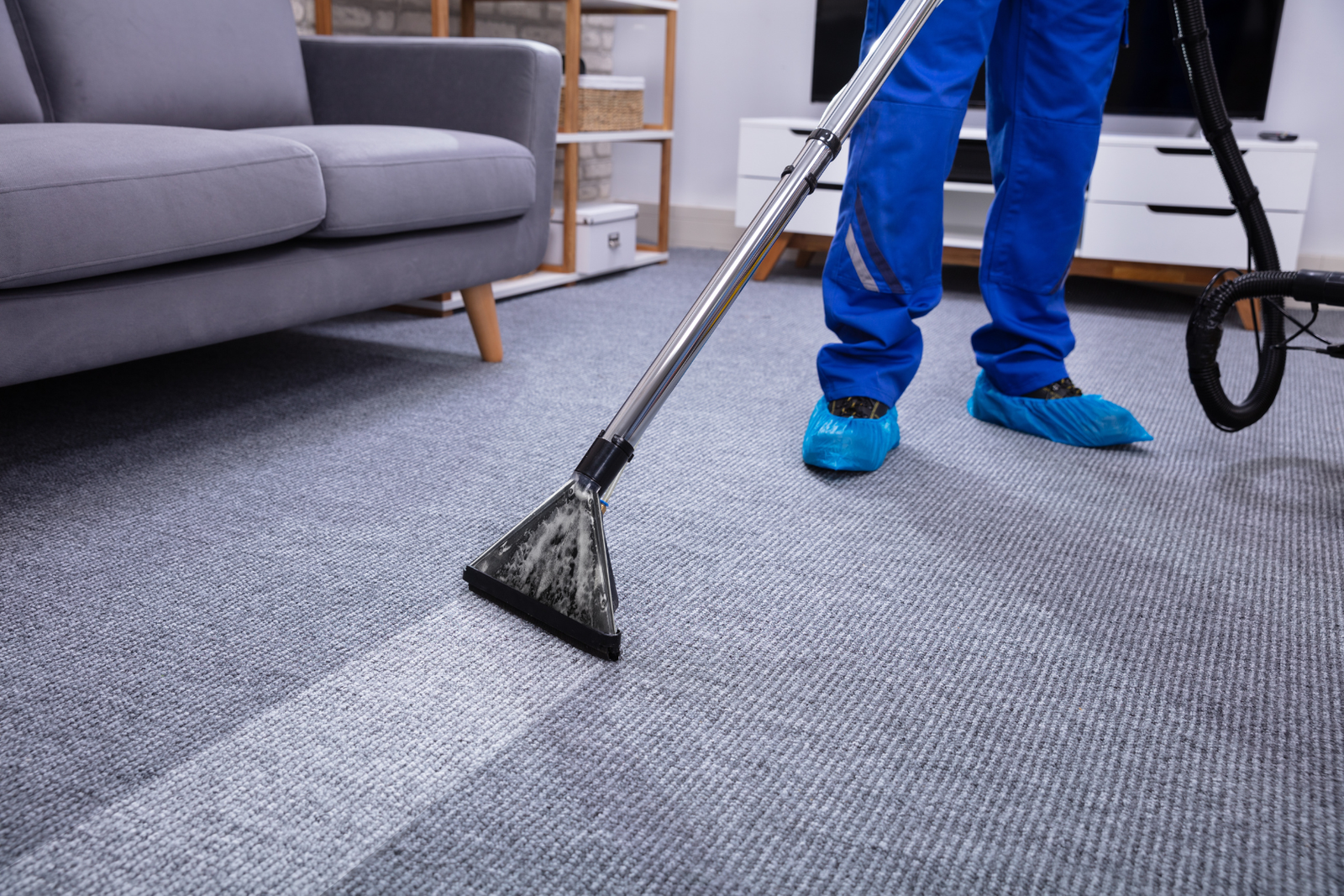
While blanket mandatory clauses cannot be enforced legally, hiring a professional carpet cleaning service remains a practical decision for many London renters. Professional carpet extraction utilizes commercial-grade equipment and specialized solutions capable of lifting deeply embedded grit, dust mites, and stubborn marks that household appliances cannot remove.
Attempting DIY carpet cleaning with hire machines poses operational risks. Over-wetting carpets can cause backing shrinkage, subfloor timber dampness, or lingering musty smells if drying times are prolonged. Furthermore, using incorrect off-the-shelf spot chemicals can set stains permanently into synthetic or wool fibers, creating clear evidence of damage on final inventory reports.
Limitations and Realistic Expectations
It is important for tenants to maintain realistic expectations regarding carpet restoration and deposit protection:
- No absolute stain removal guarantees: Chemical burns, permanent dye transfer, bleach marks, and severe historic stains cannot always be fully erased, regardless of the cleaning equipment used.
- Variable drying times: Carpet drying times depend heavily on ambient room temperature, relative indoor humidity, fiber density, and natural room ventilation.
- Fibre limitations: Delicate materials such as natural wool, viscose, or seagrass require gentle, dry or low-moisture cleaning methods, which may yield different visual results compared to synthetic polypropylene carpets.
- Deposit outcome dependency: A professional cleaning invoice serves as strong evidence of reasonable care, but final deposit decisions ultimately rest on the objective comparison between check-in and check-out inventory reports conducted by independent clerks or deposit adjudicators.
Common Mistakes London Renters Make at Checkout
Avoid these frequent mistakes when preparing carpeted rooms for tenancy handover:
- Ignoring the check-in inventory details: Assuming carpets look ‘good enough’ without verifying the specific baseline recorded at move-in.
- Using aggressive DIY spot cleaners: Applying supermarket stain removers without spot-testing, which can discolour or bleach carpet pile.
- Leaving carpets damp on key handover day: Cleaning carpets too late without adequate ventilation, resulting in damp odours during the final landlord inspection.
- Failing to take photographic evidence: Relying on verbal agreements with letting agents without photographic proof of the final carpet condition.
Frequently Asked Questions
Can a London landlord automatically deduct carpet cleaning fees from my deposit?
No. Landlords cannot make automatic deductions for carpet cleaning. Any deduction from a protected deposit must be justified with evidence showing that the carpet was returned in a dirtier state than recorded at check-in, beyond fair wear and tear. Deductions require your consent or an official ruling from a deposit dispute scheme.
What happens if my tenancy agreement still contains a mandatory cleaning clause?
Under the Tenant Fees Act 2019, any clause demanding a mandatory paid cleaning service or specifying a mandatory third-party supplier is legally unenforceable. You are only obligated to return the property to the condition recorded in the check-in inventory.
Do I have to provide a professional cleaning receipt to my letting agency?
Providing a paid receipt is not a strict legal requirement under statutory deposit rules. However, if your check-in inventory states the carpets were professionally cleaned, presenting an itemized receipt serves as primary written proof that you restored the property to the required baseline standard.
How do deposit adjudicators evaluate fair wear and tear on carpets?
Adjudicators consider the length of tenancy, the original age and quality of the carpet, and normal occupancy levels. Minor flattening or light aging is accepted as fair wear and tear, whereas dirty spots, burns, pet marks, and heavy soilage are treated as tenant responsibilities.
Can I clean the carpets myself using a hired carpet cleaning machine?
Yes, tenants are legally permitted to clean carpets themselves. However, hire machines have lower extraction power than commercial-grade units. If a DIY attempt leaves carpets overly damp or fails to achieve the check-in cleanliness standard, the landlord may still claim cleaning costs from your deposit.
Does having pets change the rules for end of tenancy carpet cleaning?
While landlords cannot charge mandatory non-refundable pet cleaning fees, pet clauses in tenancy agreements legally require tenants to rectify pet-related hygiene issues. If pets leave hair, dander, or odours, deep extraction cleaning is usually necessary to meet the required hygiene baseline.
Final Thoughts and Next Steps
Navigating tenancy end requirements in London does not have to be confusing. While UK law protects tenants from forced cleaning fees and invalid contractual clauses, maintaining a high standard of property cleanliness remains essential for securing your full deposit refund.
If your check-in inventory requires returning carpets to a deep-cleaned standard, scheduling a professional service offers peace of mind and reliable documentation. Contact OneGo Cleaning Masters today to discuss your move-out requirements and receive expert assistance tailored to your London property.