Skip to content

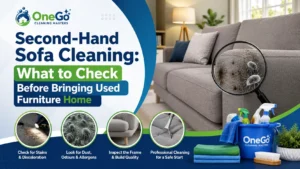
Second-hand sofa cleaning starts before used furniture enters your home. Used sofas can be good value, especially for London renters, students and first-time households. The important work starts before the sofa enters your flat. Check the upholstery, seams, cushions, underside and frame in good light; notice any damp or persistent odour; find the care label; and stop the purchase if you see signs that may need pest control rather than cleaning.
Professional second-hand sofa cleaning can remove everyday soil and improve the appearance and freshness of suitable upholstery. It cannot repair damaged fibres, reverse colour loss or treat a pest infestation. That distinction protects your home and helps you decide whether a used sofa is worth buying.
Before buying: inspect the sofa where it stands
Ask the seller to let you inspect the sofa in daylight. If possible, do this before paying or arranging a van. A listing photo can hide marks, damaged seams and worn areas, while fragrance can temporarily cover an underlying smell.
Remove every loose cushion and look at:
- piping, seams, zip areas and folds;
- the gaps beside and behind cushions;
- the underside and the points where fabric meets the frame;
- legs, joints and visible timber;
- cushion foam and removable covers;
- armrests and head-contact areas;
- the back of the sofa, especially if it stood against a cold wall.
Use a torch. Small dark marks, shed skins, eggs, live insects or unexplained spotting around seams require specialist assessment. Oxford City Council’s bed-bug guidance notes that second-hand furniture can increase bed-bug risk. If you suspect pests, do not take the sofa into your home or rely on normal upholstery cleaning. Contact a qualified pest-control professional.
OneGo Cleaning Masters provides upholstery cleaning, not pest identification, fumigation or pest treatment.
Use the smell test, but do not use fragrance as proof
Stand close to the seat, back and underside. A normal “stored furniture” smell may improve after appropriate cleaning and ventilation. A strong damp, mouldy, smoke, urine or chemical smell can be harder to resolve because the source may be inside foam, backing or the frame.
Ask useful questions:
- Was the sofa kept in a dry, occupied room or in a garage or storage unit?
- Were there pets, smoking or repeated spills in the property?
- Has anyone already used stain remover, bleach, fragrance or a hired extraction machine?
- Has the sofa ever been wet because of a leak or flood?
- Why is it being sold?
A seller may not know every detail, so treat the answers as context rather than a guarantee. If the underside feels damp, you see mould-like growth, or the odour is severe, declining the sofa is often more sensible than paying for transport and cleaning.
Find the upholstery care label
Before second-hand sofa cleaning, look under cushions or beneath the platform for a manufacturer’s label. It may identify the fibre and provide cleaning instructions. Follow the manufacturer’s directions; do not assume that every fabric tolerates water, steam, detergent or solvent.
Common online advice recommends mixtures of vinegar, washing-up liquid, baking soda, alcohol or essential oils. These can behave differently on natural fibres, synthetic fibres, velvet, viscose, leather, dyes and protective finishes. They may create water rings, colour transfer, stiffness, residue or a larger permanent mark.
If the label is missing, the fibre is uncertain or the sofa is valuable, ask a professional to inspect it before wetting a visible area. Any spot test should be small, discreet and allowed to dry fully before you judge the result.
Check whether the structure is worth cleaning
Cleaning cannot make a failing sofa sound. Sit carefully in different positions and listen for cracking or movement. Check whether the frame twists, springs press through the seat, legs are loose, zips fail or foam has collapsed.
Also distinguish soiling from permanent damage:
- Surface soil and loose crumbs: often cleanable with careful vacuuming and a suitable method.
- Some food or drink marks: may respond to professional stain treatment, but removal is never guaranteed.
- Faded or bleached patches: colour damage, not dirt; cleaning will not restore the dye.
- Worn pile, pilling or threadbare fabric: physical wear; cleaning may make it look tidier but cannot rebuild fibres.
- Deep contamination in foam: may remain even when the outer fabric looks better.
- Damp or mould-related damage: the moisture source must be addressed; cleaning alone is not a building or mould-remediation solution.
Add the purchase, collection, carrying and cleaning costs before deciding. A cheap listing can become poor value if the upholstery is unsuitable or the frame needs repair.
Keep a used sofa separate when it arrives
If the inspection found no pest or damp warning signs and you decide to proceed, plan the route before delivery. Avoid pressing the sofa against beds, clean curtains or other soft furniture. Protect floors and walls without wrapping damp upholstery in plastic for long periods.
For a flat or shared house, choose a well-lit, ventilated holding area where you can inspect it again. Remove loose cushions and check seams and the underside after transport. Moving can reveal areas that were hidden at the seller’s home.
Do not introduce loose cushions into bedrooms while the main sofa is still being assessed. Keep children and pets away from cleaning products and from wet upholstery.
A fabric-safe second-hand sofa cleaning sequence
The right method depends on the upholstery, label and condition. A cautious sequence is more useful than one universal recipe.
1. Photograph the original condition
Take clear images of stains, damage, labels and worn areas. This records what existed before any work and helps a professional assess the sofa remotely.
2. Remove dry debris
Use an upholstery attachment and controlled suction to lift loose dust and crumbs. Work along seams, below cushions and around the frame. Avoid forcing a tool across delicate or loose fabric. Empty the vacuum according to its instructions after use.
3. Check the label and fibre
Confirm whether removable covers are genuinely machine-washable. A zip does not automatically mean that a cover should go in a washing machine. Washing can cause shrinkage, dye movement or distortion.
4. Test before treating marks
Test the selected product and method in an inconspicuous area. Watch for colour transfer, rings, texture change or adhesive failure. Stop if the result is uncertain.
5. Use the least aggressive suitable method
Avoid soaking. Too much moisture can travel into foam and lengthen drying, while over-brushing can damage pile or spread a mark. Work from the care instructions and the material, not from a viral cleaning hack.
6. Dry with ventilation
Allow the sofa to dry fully before normal use. Air movement, fabric thickness, room humidity and the cleaning method all affect drying. Do not cover damp upholstery or push it immediately against a wall.
When professional upholstery cleaning is useful
Professional cleaning is worth considering when the sofa has general traffic soil, suitable treatable marks, pet hair or everyday odour and has passed the pest, damp and structural checks.
For a useful remote assessment, send OneGo:
- your London postcode;
- wide and close-up photos;
- a photo of the care label;
- the number of seats and loose cushions;
- the fabric type, if known;
- details of stains, odour and previous products;
- access information, including stairs, parking or lift restrictions.
The technician should still inspect the upholstery before selecting a method. Results depend on the fibre, colour stability, age, previous treatments, stain type and whether contamination has reached the filling. No responsible cleaner can promise that every stain or smell will disappear.
For second-hand sofa cleaning in London, you can review OneGo’s sofa cleaning service or request a quote.
When cleaning is not enough
Do not book second-hand sofa cleaning as a substitute for specialist help when:
- you see live insects, eggs, shed skins or suspicious spotting;
- the sofa or room has active damp or mould-like growth;
- urine, smoke or another contaminant has saturated the foam;
- the frame is broken or unsafe;
- the fabric is badly degraded, bleached or disintegrating;
- the seller will not allow a proper inspection;
- the odour remains overwhelming in fresh air.
Pest treatment, structural repair, fire and furnishings compliance, and specialist mould remediation are separate services. If you are buying for a furnished rental or short let, also check your legal and fire-safety responsibilities rather than assuming that a clean-looking label is sufficient.
Quick buyer checklist
Before collection, confirm all of the following:
- I inspected seams, folds, cushion gaps and the underside in good light.
- I found no pest warning signs; if uncertain, I will obtain specialist advice.
- The sofa is dry and has no severe damp or unexplained odour.
- I photographed and read the manufacturer’s care label.
- The frame, springs, legs, zips and cushions are usable.
- I understand which marks are stains and which are permanent damage.
- I know what products or machines have already been used.
- I calculated transport, cleaning and possible repair costs.
- I have a ventilated holding space away from beds and other soft furnishings.
- I accept that second-hand sofa cleaning can improve suitable upholstery but cannot guarantee every result.
Frequently asked questions
Can professional cleaning make a second-hand sofa safe from bed bugs?
No. Standard upholstery cleaning is not pest control and should not be presented as bed-bug treatment. If you see signs or have a reasonable concern, keep the sofa out of the home and contact a qualified pest professional.
Can I steam-clean every used sofa?
No. Heat and moisture may be unsuitable for some fibres, dyes, finishes, fillings and constructions. Check the manufacturer’s label and test the proposed method first.
Is a zippered cushion cover machine-washable?
Not necessarily. The zip may exist for manufacture or servicing. Machine washing can shrink or distort a cover, so follow the care label.
Will cleaning remove smoke or pet odour completely?
Second-hand sofa cleaning may improve an odour when the source is in cleanable surface soil. Odour that has penetrated foam, backing or timber may remain. An assessment cannot honestly guarantee complete removal.
What should I send for a second-hand sofa cleaning quote?
Send the postcode, photos, seat count, label, fabric if known, stain or odour details, preferred date and access information. Call or WhatsApp +44 7570 563799 to confirm suitability and availability.