Skip to content
Hantavirus is a group of viruses carried by rodents such as mice and rats. People usually become infected through contact with contaminated rodent urine, droppings or saliva, especially when particles are breathed in from dust in enclosed or poorly ventilated spaces.
The reason UK searches rose in May 2026 is the MV Hondius cruise ship outbreak, where UKHSA confirmed it was monitoring and giving public health advice after an outbreak linked to a Dutch cruise ship. UKHSA said three deaths had been reported and that the risk to the UK public remained very low.
On 6 May 2026, UKHSA said the virus type in the outbreak had been confirmed as Andes hantavirus, a strain where rare person-to-person spread has been documented through close contact.
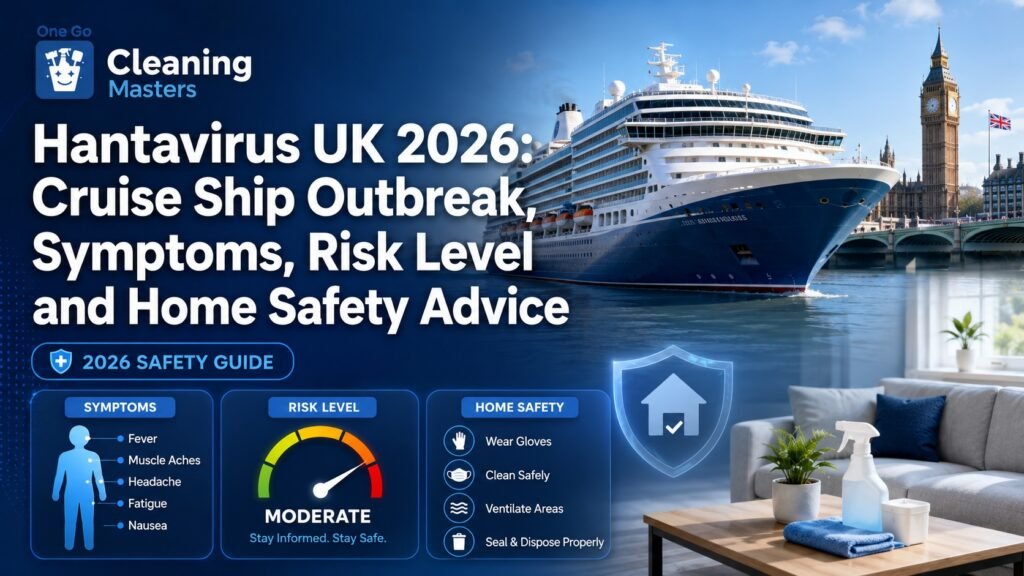
Symptoms can include fever, extreme fatigue, muscle aches, stomach pain, nausea, vomiting, diarrhoea and shortness of breath. Symptoms usually appear 2–4 weeks after exposure, but UKHSA says there are reports of symptoms occurring up to 40 days after exposure.
For people in the UK, the key message is calm but careful: hantavirus is serious, but routine public risk is very low. The main prevention point is avoiding unsafe contact with rodent urine, droppings, nests and bedding, especially in sheds, garages, holiday homes, loft spaces and places where rodents may have nested.
Hantavirus UK 2026: Why People Are Searching Now
The search term hantavirus UK 2026 has grown quickly in May because of an unusual international outbreak linked to the MV Hondius cruise ship. UKHSA said it was working with the World Health Organization, the Foreign, Commonwealth and Development Office, the Department of Health and Social Care and other international partners to prepare for British nationals returning from the ship.
This outbreak is unusual for two reasons. First, it involves a cruise ship, which naturally attracts public attention because passengers come from different countries. Second, the strain confirmed by UKHSA is Andes hantavirus, which is different from the more familiar European hantaviruses because rare human-to-human spread has been documented with this strain.
That does not mean the UK public should panic. UKHSA has repeatedly stated that the risk to the general public remains very low. The public health response is focused on monitoring, isolation support, contact tracing and advice for people connected to the ship or close contacts.
For a UK audience, the most useful questions are not only “what happened on the ship?” but also:
- What is hantavirus?
- Can it spread in the UK?
- What are the symptoms?
- How do people catch it?
- Is it linked to rats and mice?
- What should people do around rodent droppings?
- Should homes, sheds and holiday properties be cleaned differently?
What Is Hantavirus?
Hantaviruses are a group of viruses carried by rodents. GOV.UK guidance says they are normally carried by rats, mice and voles, and they can cause disease in humans ranging from mild flu-like illness to severe respiratory illness or haemorrhagic disease with kidney involvement.
Different hantaviruses are linked to different rodent hosts and different parts of the world. GOV.UK explains that “Old World” hantaviruses in Europe, Asia and Africa tend to cause haemorrhagic and kidney disease, while “New World” hantaviruses tend to cause severe respiratory disease.
The two serious disease patterns are:
| Disease Pattern | Main Region Association | Main Concern |
|---|---|---|
| Hantavirus pulmonary syndrome | Mainly associated with the Americas | Severe respiratory illness |
| Haemorrhagic fever with renal syndrome | More associated with Europe and Asia | Fever with kidney involvement |
Most people in the UK will never come into contact with hantavirus. UKHSA says infections in humans are rare and tend to occur where people and rodents coexist, most commonly in rural or agricultural settings. The virus can also be found in sheds, barns and holiday homes where rodents may have nested.
MV Hondius Cruise Ship Outbreak: Latest May 2026 Details
UKHSA’s 6 May update said three people, including one British national, with suspected hantavirus had been evacuated from the Hondius for medical care in the Netherlands. It also said British nationals still on board could be repatriated if they did not develop symptoms, and that none of the British citizens on board were currently reporting symptoms at the time of the update.
UKHSA also said two people had returned to the UK independently after being on board the MV Hondius. Neither was reporting symptoms, but both were receiving advice and support and had been advised to self-isolate. A small number of close contacts were also being supported and were self-isolating, with none reporting symptoms at the time.
ECDC’s 6 May assessment reported seven cases in the cruise-ship cluster at that point, including three deaths, one critically ill person, two symptomatic people and one person with unknown status. ECDC said the incident was rapidly evolving and the assessment was preliminary.
For UK readers, the most important point is that this is being handled as a targeted public health incident. It is not being described by UKHSA as a broad UK community outbreak.
Is Hantavirus Spreading in the UK?
UKHSA has assessed the risk to the general UK public as very low in relation to the cruise ship outbreak.
Most hantaviruses do not spread between people. UKHSA says person-to-person transmission has happened in rare cases with Andes virus, the strain identified in the cruise ship outbreak. ECDC also states that Andes virus transmission between people is typically linked to close and prolonged contact, and that the risk to the general population in Europe is considered very low while control measures are in place.
That distinction matters. Public concern often rises when a virus is mentioned alongside travel, cruise ships or deaths. But hantavirus does not behave like respiratory viruses that spread widely through casual contact. The main route is still exposure to infected rodents or their contaminated urine, droppings or saliva.
Hantavirus Symptoms
UKHSA lists symptoms of hantavirus infection as:
- Fever
- Extreme fatigue
- Muscle aches
- Stomach pain
- Nausea
- Vomiting
- Diarrhoea
- Shortness of breath
In some cases, people can develop severe breathing difficulties that require hospital care. UKHSA says symptoms usually appear between 2 and 4 weeks after exposure, although reports exist of symptoms occurring up to 40 days after exposure.
| Symptom Stage | Possible Signs | Action |
|---|---|---|
| Early illness | Fever, fatigue, muscle aches, stomach symptoms | Seek medical advice if linked to relevant exposure |
| Worsening illness | Shortness of breath, chest symptoms, severe weakness | Urgent medical attention |
| Higher-risk context | Recent exposure to rodents, droppings, travel incident or known contact | Tell health professionals about the exposure |
People should not self-diagnose hantavirus from general flu-like symptoms. Many common illnesses can cause similar symptoms. The exposure history is important, especially contact with rodent-contaminated areas or direct public health advice after travel.
How Do People Catch Hantavirus?
The usual route is exposure to infected rodents. UKHSA says people usually become infected by breathing in air contaminated with virus particles from rodent urine, droppings or saliva. The virus can also enter through cuts, the eyes or, very rarely, a rodent bite.
GOV.UK guidance also explains that infected rodents can shed infectious virus for prolonged periods through urine, faeces and saliva.
Higher-risk situations can include:
- Cleaning a shed where mice have nested
- Sweeping dry rodent droppings
- Opening a long-unused outbuilding
- Handling pet rats or their bedding without hygiene precautions
- Staying in a holiday home where rodents have been active
- Working in rural, agricultural or pest-control environments
- Disturbing nests in lofts, garages or storage spaces
The key risk is disturbing dry contaminated material and putting particles into the air.
UK Home, Shed and Holiday Property Safety
For UK homes, the practical lesson is not fear. It is safe handling of rodent contamination.
Official UK advice for pet rodents says people should not sweep or vacuum mouse or rat urine, droppings or nests because this may put infectious material into the air where it can be breathed in. The same guidance advises wearing rubber household gloves and ideally using a suitable face mask such as an FFP1 or FFP2 dust mask when cleaning rodent urine and droppings.
This is highly relevant for:
- Garden sheds
- Garages
- Lofts
- Storage rooms
- Basements
- Holiday homes
- Student flats with pest issues
- Rental properties after long vacancies
- Commercial storage spaces
- Pet rodent cages and bedding areas
A normal home clean is not the same as dealing with rodent contamination. If there is a strong rodent infestation, dead rodents, heavy droppings, nesting material or urine contamination, pest control and appropriate safety measures should come first.
Hantavirus and Cleaning: What UK Households Should Understand
Hantavirus is often discussed in relation to cleaning because the risk can rise when people disturb contaminated droppings or nests. That does not mean every home clean is risky. It means rodent contamination must be treated differently from ordinary dust.
| Situation | Risk Level | Safer Approach |
|---|---|---|
| Normal carpet dust | Low | Routine vacuuming is usually fine |
| A few food crumbs | Low | Normal household cleaning |
| Visible mouse droppings in a cupboard | Higher | Do not dry sweep or vacuum; follow safety guidance |
| Rodent nest in shed | Higher | Use protective measures and consider pest control |
| Dead rodent indoors | Higher | Avoid direct contact; use safe disposal guidance |
| Pet rat cage cleaning | Manageable with hygiene | Gloves, handwashing, safe bedding handling |
| Heavy infestation | Higher | Professional pest control before general cleaning |
OneGo Cleaning Masters provides domestic cleaning, carpet and upholstery cleaning for London homes, but rodent infestation, infectious contamination or hazardous waste situations may require specialist pest-control or biohazard services before standard cleaning. If a property has visible rodent contamination, customers should deal with the pest issue first and follow official public health advice.
For ordinary homes where carpets or soft furnishings need a refresh after pest treatment or general property use, carpet and upholstery cleaning may be suitable once the area is safe and free from active contamination.
UK Risk: Who Should Be More Careful?
Most people in the UK are at very low risk. Extra caution is more relevant for people who are more likely to encounter rodents or rodent-contaminated spaces.
This can include:
- Farmers
- Pest control workers
- People cleaning sheds or barns
- People opening unused holiday homes
- People handling pet rats
- People working in animal facilities
- People clearing lofts, garages or storage spaces
- Maintenance workers in rodent-prone buildings
- Landlords dealing with long-vacant properties
People with weakened immune systems, pregnant people, older adults and households with very young children should be especially careful around rodent contamination. Public health advice for pet rodents says extra caution should be applied when anyone in the household is under five, elderly, pregnant, chronically ill or immunocompromised.
Hantavirus Prevention Table for UK Homes
| Area | Possible Issue | Practical Prevention |
|---|---|---|
| Kitchen | Food attracting mice | Store food sealed and clean crumbs promptly |
| Loft | Rodent nesting | Check safely before moving stored items |
| Garage | Droppings near boxes | Avoid dry sweeping; use safe guidance |
| Shed | Nesting material and urine | Ventilate carefully and use protection |
| Pet rodent cage | Bedding and urine handling | Wash hands after handling bedding or cage |
| Holiday home | Long-empty rooms | Inspect for rodent signs before cleaning |
| Rental property | Pest signs between tenants | Pest control before general cleaning |
| Carpeted areas | Droppings hidden near edges | Do not vacuum suspected rodent waste |
Common Mistakes to Avoid
Sweeping dry droppings
Dry sweeping can push particles into the air. Official UK guidance warns against sweeping or vacuuming mouse or rat urine, droppings or nests.
Vacuuming contaminated material
A vacuum cleaner can disturb and spread contaminated dust. Normal vacuuming is fine for ordinary carpet dust, but not for suspected rodent urine, droppings or nests.
Ignoring rodent entry points
Cleaning without solving the rodent problem can lead to repeat contamination. Holes, food access and nesting areas should be addressed.
Using fragrance instead of cleaning
Air freshener does not deal with contamination. It may mask odour but will not remove droppings, urine or nesting material.
Treating a serious infestation as a normal clean
Heavy contamination needs specialist handling. A standard carpet or home cleaning service is not a substitute for pest control or biohazard management.
Decision Section: What UK Readers Should Do
Most UK readers do not need to change daily life because of the May 2026 hantavirus news. The public risk remains very low according to UKHSA.
You should pay closer attention if:
- You were contacted by public health authorities
- You were on or connected to the MV Hondius incident
- You recently had close exposure to someone linked to the outbreak
- You have symptoms after a relevant exposure
- You are cleaning a rodent-contaminated space
- You keep pet rats and handle bedding or cages
- You are clearing a shed, barn, loft or holiday property with rodent signs
For suspected illness after exposure, seek medical advice and mention the exposure clearly. For rodent contamination in a home or rented property, avoid dry sweeping or vacuuming droppings and follow official guidance.
For ordinary post-cleaning property care after a pest issue has been resolved, home cleaning services may support general cleaning needs in London homes, but hazardous or active rodent contamination should be handled with the right safety measures first.
FAQs
What is hantavirus?
Hantavirus is a group of viruses carried by rodents such as mice, rats and voles. People usually catch it through exposure to contaminated rodent urine, droppings or saliva, especially when particles become airborne in enclosed spaces. Illness can range from mild flu-like symptoms to severe respiratory or kidney disease.
Why is hantavirus in the UK news in May 2026?
Hantavirus is trending because UKHSA is monitoring an outbreak linked to the MV Hondius cruise ship. Three deaths were reported in connection with the outbreak, and UKHSA confirmed the strain as Andes hantavirus on 6 May 2026. The risk to the UK public remains very low.
Is hantavirus spreading in the UK?
UKHSA says the risk to the general public remains very low. The current public health response is focused on British nationals and contacts linked to the cruise ship outbreak, including isolation support, monitoring and contact tracing. This is not being described as a broad UK community outbreak.
What are the symptoms of hantavirus?
Symptoms can include fever, extreme fatigue, muscle aches, stomach pain, nausea, vomiting, diarrhoea and shortness of breath. Some people develop severe breathing difficulties that require hospital care. Symptoms usually appear 2–4 weeks after exposure, but reports exist of symptoms up to 40 days after exposure.
Can hantavirus spread from person to person?
Most hantaviruses do not spread between people. UKHSA says rare person-to-person transmission has happened with Andes virus, the strain identified in the cruise ship outbreak. This is why close contacts linked to the incident are being monitored carefully.
Can mouse droppings in a UK home carry hantavirus?
Rodent droppings can carry infections, and hantaviruses are transmitted through rodent urine, droppings and saliva. UK infections are rare, but droppings should still be handled carefully. Do not dry sweep or vacuum suspected rodent urine, droppings or nests because particles may become airborne.
Should I vacuum rodent droppings from a carpet?
No. Official UK advice says not to sweep or vacuum mouse or rat urine, droppings or nests because this can put infectious material into the air. Use appropriate protective measures and follow public health guidance. Heavy contamination should be assessed carefully before any standard cleaning takes place.
Is hantavirus linked to pet rats in the UK?
UKHSA says the UK occasionally sees cases of one hantavirus strain, Seoul hantavirus, associated with pet rats. People who keep pet rodents should use good hygiene, wash hands after handling rats or bedding, and take extra care when cleaning cages.
Do I need professional cleaning after a rodent problem?
If there is active infestation, heavy droppings, nesting material or urine contamination, pest control and safe contamination handling should come first. Standard home or carpet cleaning may be useful later for general property refresh, but it should not replace specialist pest or hazardous contamination management.
When should I seek medical help for possible hantavirus?
Seek medical advice if you develop fever, severe fatigue, muscle aches, stomach symptoms or shortness of breath after relevant exposure to rodents, rodent-contaminated spaces or a known outbreak contact. Mention the exposure clearly so healthcare professionals can assess the risk properly.
Disclaimer
This blog is for general information only and is not medical advice. Hantavirus outbreak details, case numbers, public health measures and official guidance may change as investigations continue. Anyone with symptoms after relevant exposure should seek medical advice and follow UKHSA or NHS guidance. Cleaning results and service suitability vary by property condition, contamination risk, surface type and safety requirements. OneGo Cleaning Masters does not provide medical diagnosis, pest-control advice or guaranteed decontamination outcomes. Customers should confirm service details directly before booking.