Skip to content
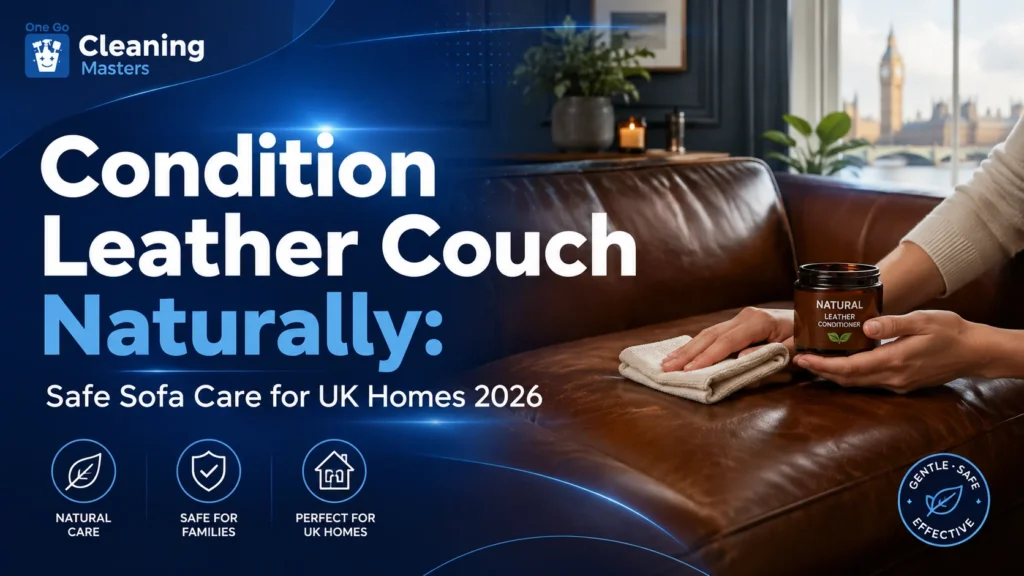
Conditioning a leather couch naturally means cleaning it gently, protecting the leather from heat and sunlight, using very small amounts of suitable conditioner, and avoiding risky homemade oils that can darken, stain or weaken the leather.
The safest natural-looking leather care routine is:
- Dust with a soft, dry microfibre cloth.
- Check the sofa care label and leather type.
- Test any cleaner or conditioner on a hidden area first.
- Use a slightly damp cloth only where the leather type allows it.
- Dry the surface fully with a clean cloth.
- Apply a small amount of leather-safe conditioner or leather balm.
- Buff gently and avoid over-conditioning.
For UK homes, the most important rule is do not use random oils, vinegar, bleach, alcohol, window cleaner, baby wipes or heavy DIY mixtures on leather sofas. Many online “homemade leather conditioner” ideas can damage real leather, especially aniline, semi-aniline, nubuck, suede or older cracked leather.
The UK Government is also reviewing domestic upholstered furniture fire safety rules in 2026, with proposals aimed at maintaining fire safety while reducing chemical flame retardant use. That makes it even more important to use safe, appropriate products on upholstered furniture and avoid unknown chemical mixtures.
For London homes, OneGo Cleaning Masters can help with sofa, upholstery, carpet and home cleaning where the issue is ordinary dirt, stains, odours or fabric care. For cracked leather, colour loss, peeling, deep scratches or structural damage, a leather repair specialist may be needed.
Condition Leather Couch Naturally: What It Really Means
Many people search how to condition leather couch naturally because they want to revive a sofa without harsh smells, expensive products or risky chemicals. That is understandable. Leather is a natural material, and when it dries out, it can look dull, feel stiff and become more likely to crack.
However, “natural” does not always mean safe. Olive oil, coconut oil, vinegar, lemon juice, baking soda pastes and household soaps are often suggested online, but they can leave residue, darken leather, strip finishes or damage the surface. Real leather is not one material; it comes in different finishes and each reacts differently.
A safe approach starts with identifying the leather type.
| Leather Type | Common Feature | Cleaning Risk |
|---|---|---|
| Pigmented / protected leather | Most common sofa leather with surface coating | Usually easiest to maintain |
| Semi-aniline leather | Softer feel with lighter coating | More sensitive to stains and moisture |
| Aniline leather | Natural, absorbent, premium feel | Marks easily and needs specialist care |
| Nubuck / suede | Soft, brushed texture | Water and oils can stain badly |
| Faux leather | Synthetic surface | Needs different care from real leather |
| Bonded leather | Mixed leather fibres and coating | Can peel; conditioner may not restore it |
If you do not know the leather type, avoid homemade products and test carefully before applying anything.
Why Leather Sofas Dry, Fade and Crack
Leather furniture can lose its fresh look for several reasons. Some are normal ageing. Others come from poor care.
Common causes include:
- direct sunlight
- heat from radiators
- dry indoor air
- body oils and sweat
- food and drink residue
- harsh cleaning products
- over-wetting
- pet scratches
- lack of conditioning
- using the wrong oil or cream
- old leather finish breaking down
DFS advises keeping leather sofas out of direct sunlight, cleaning spills immediately, and gently wiping down leather weekly with a dry cloth to remove dust and debris. It also recommends using a leather protector or conditioner as a preventative measure.
This advice matters for UK homes because many sofas sit near windows, radiators or patio doors. Heat and sunlight slowly dry the surface, while daily use adds sweat, oils and grime.
Best Homemade Leather Conditioner: Safe Answer
The safest answer is: there is no one homemade leather conditioner that is safe for every leather couch.
Many DIY recipes use oils, vinegar or waxes, but these can change the colour, clog the surface or make the sofa sticky. For expensive, old, pale, aniline, semi-aniline or cracked leather, a professionally made leather conditioner is usually safer than a homemade mixture.
A safer “natural-style” approach is:
| Step | What to Use | Why |
|---|---|---|
| Dusting | Dry microfibre cloth | Removes grit without moisture |
| Light cleaning | Slightly damp cloth if care label allows | Reduces surface grime |
| Drying | Clean dry cloth | Prevents water marks |
| Conditioning | Small amount of leather-safe conditioner | Restores suppleness where suitable |
| Buffing | Soft cloth | Removes excess product |
Leather Naturally’s leather-care guidance says aniline leather should be cleaned carefully with a dry brush or slightly damp cloth, and it stresses careful surface-wide cleaning rather than aggressive spot soaking.
For that reason, the best “homemade” conditioner is often no homemade conditioner at all. Use gentle cleaning, correct drying, and a leather-specific conditioner that matches your sofa type.
Best Product to Restore Leather Couch
The best product depends on the problem.
| Sofa Problem | Better Product Type | Important Note |
|---|---|---|
| Dry leather | Leather conditioner or leather cream | Test first; use lightly |
| Faded leather | Leather colour-restoration product | May need professional colour matching |
| Surface scratches | Leather balm or repair cream | Works only for light marks |
| Cracked leather | Leather repair filler or specialist repair | Conditioner cannot close deep cracks |
| Greasy headrest marks | Leather cleaner before conditioner | Do not condition over grime |
| Pet scratches | Leather repair product | Deep claw marks need repair |
| Peeling surface | Specialist repair or replacement | Often bonded/faux leather issue |
A proper leather conditioner should be designed for furniture leather, not shoes, car seats or saddles unless the manufacturer confirms it is suitable.
Avoid using:
- olive oil
- coconut oil
- baby oil
- cooking oil
- vinegar-heavy mixes
- lemon juice
- bleach
- ammonia
- alcohol
- window cleaner
- acetone
- abrasive sponges
- furniture polish
Crate & Barrel’s leather-care advice warns against bleach, ammonia, acetone, window cleaners and alcohol-based products, recommending pH-balanced leather cleaners instead.
How to Restore Cracked Leather Couch
Cracked leather needs realistic expectations. Conditioner can soften dry leather and reduce the look of light dryness, but it cannot magically close deep cracks.
There are three levels of damage.
| Crack Level | What It Looks Like | What May Help |
|---|---|---|
| Light dryness | Dull surface, slight stiffness | Cleaning and careful conditioning |
| Surface cracking | Fine lines in used areas | Conditioner may improve look; repair cream may help |
| Deep cracks | Split leather, rough edges, exposed backing | Professional repair usually needed |
| Peeling | Flaking surface layer | Often bonded/faux leather; conditioner will not fix it |
To handle cracked leather safely:
- Dust the sofa first.
- Clean gently if the care label allows.
- Let it dry fully.
- Apply a small amount of leather conditioner to a hidden test area.
- Wait and check for darkening or stickiness.
- Apply lightly to the affected area if safe.
- Buff away excess.
- Speak to a leather repair specialist for deep cracks.
Do not soak cracked leather. Water and oil can move through cracks and worsen the backing or darken the surrounding area.
How to Fix Leather Couch Discoloration
Leather discoloration can happen because of sunlight, body oils, cleaning products, dye transfer, pet wear or surface finish breakdown.
Natural conditioning may improve dullness, but it usually cannot reverse true colour loss. If the colour has faded, rubbed away or been bleached, the sofa may need a colour restoration product or professional leather recolouring.
Common discoloration types:
| Discoloration Type | Likely Cause | Best Direction |
|---|---|---|
| Pale fading | Sunlight or age | Leather colour restoration |
| Dark headrest patches | Body oils and hair products | Leather cleaner first |
| Blue marks | Denim dye transfer | Specialist leather cleaner |
| White patches | Product residue or surface damage | Professional assessment |
| Orange/brown fade | UV and dryness | Conditioner may help slightly; recolouring may be needed |
| Patchy darkening | Wrong oil or wet cleaning | Specialist advice |
Do not try to “even out” leather colour with cooking oil. It may darken the leather permanently and create greasy patches.
Best Oil for Leather Couch
For most leather sofas, the safest answer is: do not use kitchen oils on your leather couch.
Olive oil, coconut oil and baby oil can make leather look better for a short time, but they may darken the surface, become sticky, attract dust or cause long-term damage. Some oils can also go rancid or leave an uneven finish.
If you want an oil-based leather care product, use a product specifically made for leather furniture and follow the label. Even then, test first.
| Oil or Product | Safe for Leather Sofa? | Comment |
|---|---|---|
| Olive oil | Not recommended | Can darken and leave residue |
| Coconut oil | Not recommended | Can stain and feel greasy |
| Baby oil | Not recommended | Not made for sofa leather |
| Mineral oil | Risky unless in leather product | May affect finish |
| Beeswax leather balm | Possible if made for leather | Test first |
| Leather conditioner | Usually safest if matched to sofa | Follow product instructions |
Leather Conditioner Alternatives
A leather conditioner alternative should not mean random household products. It can mean a gentler maintenance routine that reduces the need for heavy conditioning.
Useful alternatives include:
- keeping the sofa out of direct sunlight
- keeping it away from radiators
- dusting weekly
- cleaning spills immediately
- using throws on high-use areas
- maintaining indoor humidity
- avoiding harsh products
- using a leather protector suitable for the sofa
- booking professional sofa cleaning where appropriate
For London homes where the sofa needs a deeper clean but not leather repair, OneGo Cleaning Masters offers sofa cleaning and carpet and upholstery cleaning. Service suitability depends on sofa material, leather type, stains and condition.
What Is the Best Homemade Cleaner for Leather Sofas?
For protected leather only, a very gentle approach may be enough:
- dry microfibre cloth for dust
- slightly damp cloth for light grime
- mild pH-neutral soap used very sparingly if the care label allows
- immediate drying with a clean cloth
Do not use homemade cleaner on suede, nubuck, unfinished leather or unknown leather.
A safer cleaning routine:
| Step | Method |
|---|---|
| 1 | Remove dust with a dry cloth |
| 2 | Check the care label |
| 3 | Test a hidden area |
| 4 | Use a barely damp cloth if suitable |
| 5 | Dry immediately |
| 6 | Apply conditioner only after cleaning, if needed |
The Spruce’s leather-care guidance also stresses avoiding soaking leather, drying thoroughly, testing conditioner first and avoiding abrasive cleaners or products containing bleach or ammonia.
How to Make a Leather Couch Look Good Again
A leather couch usually looks better when the care routine is simple and consistent.
1. Remove dust
Use a soft microfibre cloth. Dust and grit can scratch leather when rubbed.
2. Clean high-touch areas
Focus on armrests, headrests, seat cushions and seams. These collect body oils and dirt.
3. Deal with spills quickly
Blot liquids with a clean cloth. Do not rub hard.
4. Condition lightly
Use a small amount of leather-safe conditioner. Too much product can leave a greasy surface.
5. Buff the surface
Buffing removes excess product and gives a cleaner finish.
6. Protect from heat
Move the sofa away from radiators and strong sunlight where possible.
7. Repair damage properly
Deep cracks, peeling, colour loss and torn leather need specialist repair, not DIY oil.
Leather Couch Care for UK Homes
UK homes create specific sofa-care problems.
| UK Home Situation | Leather Sofa Risk | Practical Care |
|---|---|---|
| Radiator nearby | Drying and cracking | Move sofa away or reduce heat exposure |
| South-facing window | Fading and colour loss | Use blinds or reposition sofa |
| Pets | Scratches and odour | Use throws and clean quickly |
| Children | Food marks and spills | Blot spills immediately |
| Humid rooms | Damp smell and mould risk | Improve ventilation |
| Rental homes | Wear and inspection issues | Keep cleaning records |
| Small London flats | Limited airflow | Dry surfaces fully |
| Open-plan kitchen | Grease residue | Wipe high-use areas gently |
For wider home cleaning around living rooms, carpets and fabric areas, OneGo Cleaning Masters provides home cleaning services for London properties.
When Professional Help Is Better Than DIY
DIY leather care is suitable for light dust, minor dullness and routine maintenance. It is not the right answer for every problem.
Call a professional leather or upholstery specialist if:
- leather is cracked deeply
- colour has faded badly
- the sofa is aniline, nubuck or suede
- there is peeling or flaking
- dye has transferred from jeans
- stains have spread
- previous products left sticky residue
- the sofa is expensive or antique
- the manufacturer warranty may be affected
For ordinary sofa freshness, upholstery cleaning may help. For structural leather damage, a leather repair technician is usually more suitable.
Common Mistakes to Avoid
Using olive oil
It may darken the leather and leave greasy patches.
Using vinegar without testing
Vinegar can affect finishes and may dry leather if used incorrectly.
Scrubbing stains
Scrubbing can damage the surface and spread marks.
Conditioning dirty leather
Conditioner should not be applied over grime, body oil or food residue.
Over-conditioning
Too much conditioner can make leather sticky and attract dust.
Ignoring the care label
Some leather finishes need specialist care.
Using heat to dry leather
Hairdryers and radiators can dry and crack leather.
Expecting conditioner to repair cracks
Conditioner can soften leather but cannot rebuild split material.
Decision Section: What Should You Use?
Use a dry microfibre cloth if the sofa is only dusty.
Use a slightly damp cloth if the leather type and care label allow it.
Use a leather-safe cleaner if the sofa has grime, body oils or light marks.
Use a leather conditioner if the leather is dry, dull or slightly stiff.
Use a leather repair product or specialist if the sofa has cracks, peeling, colour loss or deep scratches.
Use sofa cleaning services if the problem is general upholstery freshness, odour, surrounding carpets or mixed fabric care.
Avoid homemade oils unless the sofa manufacturer specifically approves them.
FAQs
How do I condition a leather couch naturally?
Dust the sofa first, check the care label, test a hidden area, clean gently with a dry or slightly damp cloth if suitable, let the leather dry fully, then apply a small amount of leather-safe conditioner. Avoid kitchen oils, vinegar-heavy mixes and harsh cleaners.
What is the best homemade leather conditioner?
There is no homemade leather conditioner that is safe for every sofa. The safest option is a leather-specific conditioner matched to the sofa type. Homemade oils such as olive oil or coconut oil can darken, stain or leave greasy residue on leather.
What is the best product to restore a leather couch?
For dry leather, use a leather conditioner or leather cream made for furniture. For colour loss, use a leather recolouring product or professional service. For cracks, use a leather repair kit or specialist repair. Conditioner alone cannot fix deep cracks or peeling.
How can I restore a cracked leather couch?
Light dryness may improve with careful cleaning and conditioning. Surface cracks may need leather repair cream. Deep cracks, splits, peeling or exposed backing usually need professional repair. Do not soak cracked leather or apply heavy oils.
How do I fix leather couch discoloration?
First identify the cause. Body oils, sunlight, dye transfer and cleaning damage all need different treatment. Conditioning may improve dullness but will not usually restore lost colour. Serious discoloration may need professional leather recolouring.
What is the best oil for a leather couch?
Kitchen oils are not recommended for leather sofas. Olive oil, coconut oil and baby oil can darken leather, attract dust or leave sticky patches. Use a leather furniture conditioner or leather balm designed for the sofa type.
What are safe leather conditioner alternatives?
Safe alternatives include regular dusting, keeping the sofa away from direct sunlight, cleaning spills immediately, using throws on high-use areas, improving room humidity and using a leather protector suitable for the sofa. These reduce the need for heavy conditioning.
What is the best homemade cleaner for leather sofas?
For protected leather only, a barely damp cloth may be enough for light cleaning. A very mild pH-neutral soap solution may be used sparingly if the care label allows it, but always test first. Avoid bleach, ammonia, alcohol, window cleaner and abrasive products.
How do I bring old leather back to life?
Clean gently, remove surface grime, condition lightly with a leather-safe product, buff the surface and protect it from heat and sunlight. If the leather is cracked, faded, sticky, peeling or badly worn, professional leather repair may be needed.
Can OneGo Cleaning Masters clean leather sofas?
OneGo Cleaning Masters offers sofa, upholstery, carpet and home cleaning services in London. Leather sofa suitability depends on the leather type, condition, stains and care label. For cracked leather, peeling, recolouring or structural repair, a leather repair specialist may be needed.
Disclaimer
This blog is for general leather sofa care and home-cleaning guidance only. Leather types and finishes vary, and unsuitable products can cause staining, darkening, cracking, peeling or warranty issues. Always check the manufacturer’s care label and test any cleaner or conditioner on a hidden area first. OneGo Cleaning Masters provides sofa, upholstery, carpet and home cleaning services, but specialist leather restoration, recolouring, crack repair or certified leather repair may require a dedicated leather technician. Service suitability, prices and availability should be confirmed directly before booking.