Skip to content
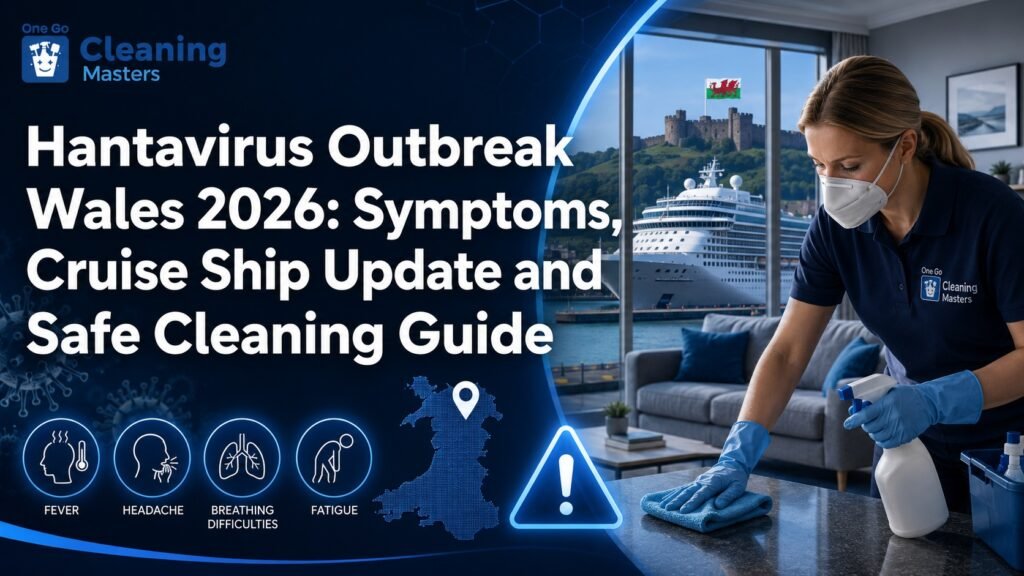
Hantavirus outbreak Wales is trending in the UK because people are searching for updates after the MV Hondius cruise ship outbreak, a medic with symptoms being treated in a London hospital, and public concern around rodent-borne infection.
There is no confirmed community outbreak of hantavirus across Wales in the official UK updates reviewed for this article. The main UK-linked situation is connected to the MV Hondius cruise ship outbreak, British nationals, UK Overseas Territories, isolation support and specialist assessment in England. UKHSA repeatedly states that the risk to the general public remains very low.
Hantaviruses are carried by rodents such as rats, mice and voles. GOV.UK says transmission to humans can happen through inhaling infected rodent urine, faeces or saliva.
Symptoms can include fever, extreme tiredness, muscle aches, stomach pain, nausea, vomiting, diarrhoea and shortness of breath. UKHSA says symptoms of Andes hantavirus usually appear 2–4 weeks after exposure, with reports up to 40 days.
Cleaning advice must be careful. Do not sweep or vacuum rodent urine, droppings or nests when contamination is suspected, because this can push infectious particles into the air. GOV.UK gives the same warning for rodent urine, droppings and nests.
OneGo Cleaning Masters does not claim to remove hantavirus or provide certified biohazard decontamination. For active infestations, heavy droppings, dead rodents or hazardous contamination, pest control and official safety guidance should come first. General carpet, upholstery and home cleaning may be suitable only after the area is safe.
Hantavirus Outbreak Wales 2026: Why the Topic Is Trending
The phrase Hantavirus outbreak Wales is gaining UK search traffic because hantavirus has moved from a niche public health term into mainstream news. The main driver is the MV Hondius cruise ship outbreak, which has involved international monitoring, British nationals, isolation arrangements and specialist UK medical support.
ITV reported on 18 May 2026 that a medic who developed hantavirus symptoms on Ascension Island was being cared for at the High Consequence Infectious Diseases unit at Guy’s and St Thomas’ NHS Foundation Trust in London. The report also said nine people from St Helena and Ascension Island who may have been exposed had arrived in the UK to self-isolate, supported by the NHS infectious disease network.
The same ITV report stated that the MV Hondius had docked in Rotterdam, where the ship was to be disinfected, and that the outbreak had led to at least 11 reported cases among passengers, including three deaths.
For Wales-based searches, the safest wording is this: public interest is high in Wales and across the UK, but the official updates reviewed here do not show a confirmed community outbreak across Wales. The UK public health focus is on people linked to the cruise ship, close contacts, specialist care, isolation and international contact tracing.
This article is written as an awareness and safe-cleaning guide for UK readers. It is not a medical diagnosis page, not a fear-based warning, and not a claim that normal cleaning services can remove hantavirus.
What Is Hantavirus?
Hantavirus is not one single virus. It is a group of viruses carried by rodents. GOV.UK says hantaviruses are normally carried by rats, mice and voles and can cause illnesses ranging from mild flu-like disease to severe respiratory illness or haemorrhagic disease with kidney involvement.
Different hantaviruses are associated with different rodent hosts and different parts of the world. GOV.UK explains that Old World hantaviruses, found in Europe, Asia and Africa, tend to cause haemorrhagic and kidney disease, while New World hantaviruses are more often linked with severe respiratory disease.
UKHSA says the Andes virus strain identified in the 2026 cruise ship outbreak has never been detected in the UK rodent population. The strain seen occasionally in the UK is Seoul hantavirus, carried by wild brown rats and pet rats, and UKHSA says Seoul hantavirus does not spread between people.
That distinction matters for UK readers. The current news is serious, but it does not mean ordinary households in Wales, London or elsewhere in the UK are facing the same risk as people directly linked to the cruise ship outbreak.
Hantavirus Cruise Ship Update: MV Hondius
The World Health Organization said that, as of 13 May 2026, there were 11 cases, including three deaths, linked to the MV Hondius cluster. WHO said eight cases were laboratory-confirmed for Andes virus infection, two were probable and one remained inconclusive at that stage. WHO assessed the risk to the global population as low while monitoring continued.
WHO also said the working hypothesis was that the first case acquired infection before boarding, through land-based exposure, and that investigations were continuing with authorities in Argentina and Chile. It added that current evidence suggested later human-to-human transmission onboard the ship.
For UK readers, the key points are:
| Topic | Current May 2026 Position |
|---|---|
| Main outbreak link | MV Hondius cruise ship |
| Virus strain | Andes hantavirus |
| UK public risk | Very low, according to UKHSA |
| Main UK action | Isolation, monitoring, testing, specialist assessment |
| Cruise ship status | Docked in Rotterdam for disinfection |
| Community outbreak in Wales | Not confirmed in official UK updates reviewed |
| Home relevance | Safe handling of rodent droppings, urine, nests and contaminated materials |
Hantavirus Symptoms
UKHSA lists hantavirus symptoms as fever, extreme fatigue, muscle aches, stomach pain, nausea, vomiting, diarrhoea and shortness of breath. In some cases, people develop severe breathing problems requiring hospital care.
The timing also matters. UKHSA says symptoms of Andes hantavirus usually appear 2–4 weeks after exposure, but there are reports of symptoms occurring up to 40 days after exposure.
| Symptom Area | Possible Signs |
|---|---|
| General illness | Fever, extreme tiredness, muscle aches |
| Digestive symptoms | Stomach pain, nausea, vomiting, diarrhoea |
| Breathing symptoms | Shortness of breath, severe breathing difficulty |
| Timing | Usually 2–4 weeks after exposure, sometimes up to 40 days |
| Higher concern | Symptoms after known exposure to rodents, rodent waste or an outbreak-linked contact |
People should not self-diagnose hantavirus from general flu-like symptoms. Many common illnesses can look similar. The exposure history is important, especially contact with rodent urine, droppings, nests, contaminated bedding or an official outbreak-linked contact.
Hantavirus Treatment
UKHSA says there is currently no vaccine or specific antiviral treatment for most hantavirus infections. Treatment is supportive and based on symptoms, including hospital care and respiratory support when needed.
This is why anyone with symptoms after relevant exposure should seek medical advice and clearly explain the exposure. A person who has cleaned a heavily rodent-contaminated shed, handled pet rat bedding, entered an infested outbuilding, or been contacted by public health teams should mention that context.
For severe breathing symptoms, urgent medical care is important.
Hantavirus Transmission
Hantavirus is mainly linked with rodent exposure. UKHSA says people usually become infected by breathing in air contaminated with particles from rodent urine, droppings or saliva. The virus can also enter through cuts, the eyes or, very rarely, a rodent bite.
Most hantaviruses do not spread between humans. UKHSA says person-to-person transmission has happened in rare cases with the Andes virus strain, usually after close and prolonged contact with an infected person.
For normal UK households, the main practical concern is not casual public contact. It is unsafe disturbance of rodent urine, droppings, nests, bedding or contaminated dust.
Higher-risk situations can include:
- Clearing a shed with mouse droppings
- Sweeping dry rodent waste
- Vacuuming a contaminated loft or garage
- Opening a long-empty holiday property
- Handling pet rat bedding without good hygiene
- Moving boxes from an infested storage room
- Cleaning behind kitchen units where rodents have been active
- Dealing with dead rodents indoors
- Working in pest-prone commercial storage areas
Hantavirus Map: What UK Readers Should Understand
People searching “hantavirus map” usually want to know whether the virus is present near them. That question needs context.
Hantaviruses exist in different forms across different regions. GOV.UK notes that Seoul virus is worldwide, including the UK, while Puumala is found in parts of Europe and Andes virus is linked mainly with South America.
For the current cruise ship outbreak, WHO says Andes virus is endemic in South America, with confirmed circulation and human cases mainly in Argentina and Chile, and additional cases or related strains in Uruguay, southern Brazil and Paraguay.
For UK readers, the useful map logic is:
| Location Type | Risk Context |
|---|---|
| Wales and UK homes | Routine public risk remains very low |
| UK pet rat or wild rat exposure | Occasional Seoul hantavirus risk exists |
| Sheds, barns, garages, lofts | Risk increases if rodents have nested |
| South America exposure areas | Andes virus is more relevant |
| MV Hondius contacts | Follow public health advice |
| General public spaces | Not the main risk setting |
Safe Cleaning After Rodents: UK Household Guidance
Cleaning after rodents is where this topic becomes directly relevant to hygiene and property care.
GOV.UK guidance says infections may be acquired through contact with rodent urine, droppings, saliva or bedding materials, or by breathing in rodent dander, dried droppings and urine, or dust contaminated by them. It specifically says hantavirus infections can result from breathing in the virus when rodent urine and droppings are stirred into the air.
The same GOV.UK guidance says not to sweep or vacuum mouse or rat urine, droppings or nests because this may cause infectious material to enter the air where it can be breathed in. It recommends rubber household gloves, ideally a suitable face mask such as FFP1 or FFP2, damp removal, cleaning, disinfection and air drying.
CDC guidance gives similar advice: do not vacuum or sweep rodent urine, droppings or nesting material before disinfection, because contaminated droplets can become airborne. It advises soaking urine and droppings with disinfectant, waiting according to product instructions, wiping them up, disposing of waste safely, then washing hands after glove removal.
Safe Cleaning Table for UK Homes
| Situation | Safer Action | Avoid |
|---|---|---|
| A few droppings in a cupboard | Follow official damp-cleaning and disinfection guidance | Dry sweeping or vacuuming |
| Rodent nest in shed | Ventilate, use protection, consider pest control | Stirring dust or moving nest dry |
| Contaminated bedding or clothing | Wash with detergent on the hottest wash it can withstand | Shaking indoors before washing |
| Dead rodent | Use gloves and safe disposal guidance | Direct hand contact |
| Heavy infestation | Use pest control and specialist advice | Treating it as a normal clean |
| Carpet with suspected droppings | Do not vacuum dry contamination | Standard vacuuming before safety steps |
| Active rodent problem | Resolve infestation first | Booking normal cleaning before pest control |
Bedding, Clothing, Carpets and Upholstery
GOV.UK says contaminated bedding or clothing should be washed with laundry detergent on the hottest wash it can withstand if rodent urine or droppings are present.
CDC guidance says clothing, bedding or stuffed animals that may be contaminated should be laundered with hot water and detergent, and machine dried on a high setting or dried in the sun. It also says rugs and upholstered furniture can be shampooed with a commercial disinfectant or a commercial-grade steam cleaner or shampoo after rodent urine and droppings have been sanitised and removed.
This is an important boundary for cleaning services.
OneGo Cleaning Masters can help with ordinary carpet, upholstery and home cleaning where the property is safe and free from active contamination. It does not claim to remove hantavirus, provide medical decontamination or replace pest control.
If there are active rodents, heavy droppings, nests, dead rodents, contaminated insulation, contaminated air ducts or hazardous waste, pest control and specialist contamination advice should come first.
Once the rodent problem has been dealt with and the area is safe, OneGo Cleaning Masters may support general property refresh work through carpet and upholstery cleaning or home cleaning services for London homes.
Hantavirus and Rental Properties
Landlords, tenants and letting agents should treat rodent evidence carefully. A few droppings in a cupboard are not the same as an active infestation, but neither should be ignored.
For rented homes, the safest order is:
- Identify signs of rodents.
- Avoid dry sweeping or vacuuming droppings.
- Contact the landlord, agent or pest control where needed.
- Follow official safety guidance for any minor clean-up.
- Keep records and photos where relevant.
- Arrange normal cleaning only after the area is safe.
Common risk areas in rental properties include kitchen kickboards, storage cupboards, meter cupboards, lofts, sheds, garages, under-stair spaces, bin areas and void periods between tenancies.
For end-of-tenancy situations, cleaning should not be used as a substitute for pest control. If rodents are active, the infestation must be addressed first.
Hantavirus and Offices, Shops and Storage Areas
Commercial spaces can also have rodent exposure risks, especially where food, waste, cardboard, storage or poor building sealing are present.
Possible risk areas include:
- Storage rooms
- Stockrooms
- Waste areas
- Kitchenettes
- Staff rooms
- Basement storage
- Utility cupboards
- Warehouses
- Food-preparation support areas
- Empty units
A business should not ask normal cleaning staff to dry sweep or vacuum rodent droppings. If there is a significant rodent problem, pest control and workplace safety procedures should be followed.
After pest control and safe removal, general cleaning may be needed for carpets, floors, upholstery, desks and surfaces.
Common Mistakes to Avoid
Treating every headline as a local outbreak
High search traffic does not always mean local community spread. Current UK official updates focus on the MV Hondius-linked outbreak, contacts and specialist monitoring, while UKHSA says general public risk remains very low.
Dry sweeping rodent droppings
This is one of the main unsafe actions. GOV.UK says mouse or rat urine, droppings and nests should not be swept or vacuumed because infectious material can enter the air.
Vacuuming before disinfection
CDC guidance says rodent urine, droppings and nesting material should not be vacuumed or swept before disinfection.
Booking normal cleaning during an active infestation
Normal home cleaning, carpet cleaning or upholstery cleaning is not the right first step when rodents are active or droppings are heavy. Pest control comes first.
Claiming a cleaning service removes hantavirus
This should be avoided unless a company is certified and equipped for biohazard decontamination. Standard carpet or home cleaning should be described as general cleaning after safety measures, not virus removal.
Ignoring symptoms after relevant exposure
Anyone with symptoms after relevant rodent exposure or official outbreak-linked contact should seek medical advice and explain the exposure.
Decision Section: What UK Readers Should Do
For most people in Wales, London and the wider UK, the current risk remains very low. The practical response should be calm and evidence-based.
Seek medical advice if symptoms appear after relevant exposure, especially if public health teams have contacted you, you were linked to the MV Hondius outbreak, or you recently handled rodent-contaminated material.
Use pest control if rodents are active in a home, rental property, office or storage space.
Follow official cleaning guidance if you find droppings, urine, nests or contaminated bedding.
Avoid dry sweeping or vacuuming suspected rodent waste.
Use normal cleaning services only when the property is safe and the issue is ordinary household dirt, carpet marks, upholstery stains or post-pest-control refresh work.
FAQs
Is there a hantavirus outbreak in Wales in 2026?
There is no confirmed community outbreak across Wales in the official UK updates reviewed for this article. The current UK-linked concern is mainly connected to the MV Hondius cruise ship outbreak, British nationals, UK Overseas Territories, isolation support and specialist assessment in England. UKHSA says the risk to the public remains very low.
What are hantavirus symptoms?
Hantavirus symptoms can include fever, extreme fatigue, muscle aches, stomach pain, nausea, vomiting, diarrhoea and shortness of breath. In some cases, breathing problems can become severe and require hospital care. UKHSA says symptoms of Andes hantavirus usually appear 2–4 weeks after exposure, with reports up to 40 days.
What is the hantavirus cruise ship outbreak?
The outbreak is linked to the MV Hondius cruise ship. WHO reported 11 cases including three deaths as of 13 May 2026, with eight laboratory-confirmed Andes virus infections. UK authorities have been involved in repatriation, isolation, testing and monitoring of British nationals and contacts.
Can hantavirus spread from person to person?
Most hantaviruses do not spread between people. UKHSA says person-to-person transmission has happened in rare cases with Andes virus, usually after close and prolonged contact with an infected person. This is why outbreak-linked contacts are being monitored carefully.
Is there hantavirus treatment?
UKHSA says there is no vaccine or specific antiviral treatment for most hantavirus infections. Treatment is supportive and depends on symptoms, including hospital care and respiratory support if needed. Anyone with symptoms after relevant exposure should seek medical advice and mention the exposure.
Can mouse droppings in a UK home carry hantavirus?
Rodent droppings can carry infections, and hantavirus can be linked with rodent urine, droppings and saliva. UK infections are rare, but droppings should still be handled safely. GOV.UK says not to sweep or vacuum rodent urine, droppings or nests because particles can enter the air.
Should I vacuum rodent droppings from carpet?
No. Do not vacuum suspected rodent droppings, urine or nesting material. GOV.UK and CDC guidance both warn against dry sweeping or vacuuming because particles can become airborne. Follow official damp-cleaning and disinfection guidance, and use pest control for active or heavy infestation.
Does OneGo Cleaning Masters remove hantavirus?
No. OneGo Cleaning Masters does not claim to remove hantavirus or provide certified biohazard decontamination. For active rodent infestation, heavy droppings, dead rodents or hazardous contamination, pest control and official health guidance should come first. OneGo may help with general carpet, upholstery or home cleaning once the area is safe.
Is carpet cleaning useful after a rodent problem?
Carpet cleaning may be useful only after the rodent issue has been controlled and any contamination has been handled safely. If droppings, urine or nesting material are present, do not treat the area as a normal carpet cleaning job. Follow official guidance first.
When should I contact pest control?
Contact pest control if there are active rodents, repeated droppings, nests, dead rodents, damaged food packaging, smells, wall noises or signs in lofts, sheds, kitchens, offices or storage rooms. Cleaning alone will not solve an active infestation.
Disclaimer
This blog is for general public awareness and safe-cleaning guidance only. It is not medical advice, diagnosis, pest-control advice or certified biohazard guidance. Hantavirus outbreak details, case numbers, public health measures and official advice may change as investigations continue. Anyone with symptoms after relevant exposure should seek medical advice and follow UKHSA or NHS guidance. OneGo Cleaning Masters does not claim to remove hantavirus or provide certified biohazard decontamination. Cleaning service suitability, availability and outcomes depend on property condition, contamination risk, surface type and safety requirements.