 +44 7570 563799Free quote
Quick answer
Regular cleaning maintains accessible surfaces and routine household tasks on a repeating schedule. Deep cleaning adds agreed detail work, neglected areas and extra time. End-of-tenancy and short-let turnover have different objectives again. For deep cleaning vs regular cleaning London households should compare a written room-by-room scope, not the package name alone.
Two London cleaners can use the phrase “deep clean” for different task lists. One may include skirting boards and cupboard fronts; another may include the inside of cupboards only when they are empty. Ovens, carpets, upholstery, exterior windows and waste removal are often separate services. A label without a checklist makes quotations difficult to compare.
This guide explains deep cleaning vs regular cleaning London customers can use for occupied flats, new routines, tenancy handovers and short lets. OneGo Cleaning Masters’s home-cleaning service page provides the starting point for a property-specific scope.
What is regular domestic cleaning?
Regular cleaning is planned maintenance. It commonly concentrates on reachable surfaces, floors, bathrooms, kitchens and routine dust or waste tasks. The exact list depends on the agreement, frequency, household size and time available. It should not silently expand each visit without adjusting the schedule.
A useful recurring plan names priorities. For example, the bathroom and kitchen may be essential every visit, while one rotating task is added when time allows. This is clearer than expecting every infrequent detail to fit into a short weekly booking.
- Dusting and wiping agreed accessible surfaces.
- Vacuuming and mopping suitable floors.
- Cleaning agreed bathroom fixtures.
- Wiping kitchen worktops and exterior fronts.
- Emptying agreed household bins.
- A small number of clearly defined rotating tasks.
What usually makes a clean “deep”?
Deep cleaning normally means more detail, more neglected areas or more time than routine maintenance. However, there is no universal legal checklist for the phrase. The customer and provider should define it by room, surface and inclusion.
OneGo Cleaning Masters’s guide on how often to deep-clean a London home can help with timing. The useful decision is based on condition: accumulated grease, dust at edges, soap residue, accessible areas behind furniture, detailed fittings or a long gap since the previous clean.
| Area | Regular example | Possible deep-clean addition |
|---|---|---|
| Kitchen | Worktops and exterior fronts | Detailed splashback, edges and agreed appliance exteriors |
| Bathroom | Fixtures and accessible surfaces | Detailed scale and residue work where suitable |
| Living room | Dusting and floors | Skirting, accessible edges and detailed fittings |
| Bedroom | Reachable surfaces and floors | Accessible areas beneath movable items |
| Hall | Vacuum or mop | Edges, doors and detailed touchpoints |
When do you need an end-of-tenancy clean instead?
An end-of-tenancy cleaning service is organised around a property handover and the agreed check-in inventory or landlord instructions. It may require an empty property and a different room-by-room specification. It is not automatically identical to a general deep clean.
The UK Government’s Tenant Fees Act guidance says a landlord or agent cannot generally require a tenant to pay for a professional clean as a prohibited fee, although the tenant remains responsible for returning the property to the standard required by the tenancy, allowing for fair wear and tear. Read your agreement and inventory rather than relying on a generic internet checklist.
- Use the check-in inventory and photographs.
- Confirm whether the property must be empty.
- List appliances, cupboards and specialist floors separately.
- Clarify carpet, upholstery and exterior-window requirements.
- Allow time for inspection and any agreed follow-up.
- Keep invoices and completion evidence without assuming they guarantee a deposit outcome.
How is Airbnb or short-let turnover different?
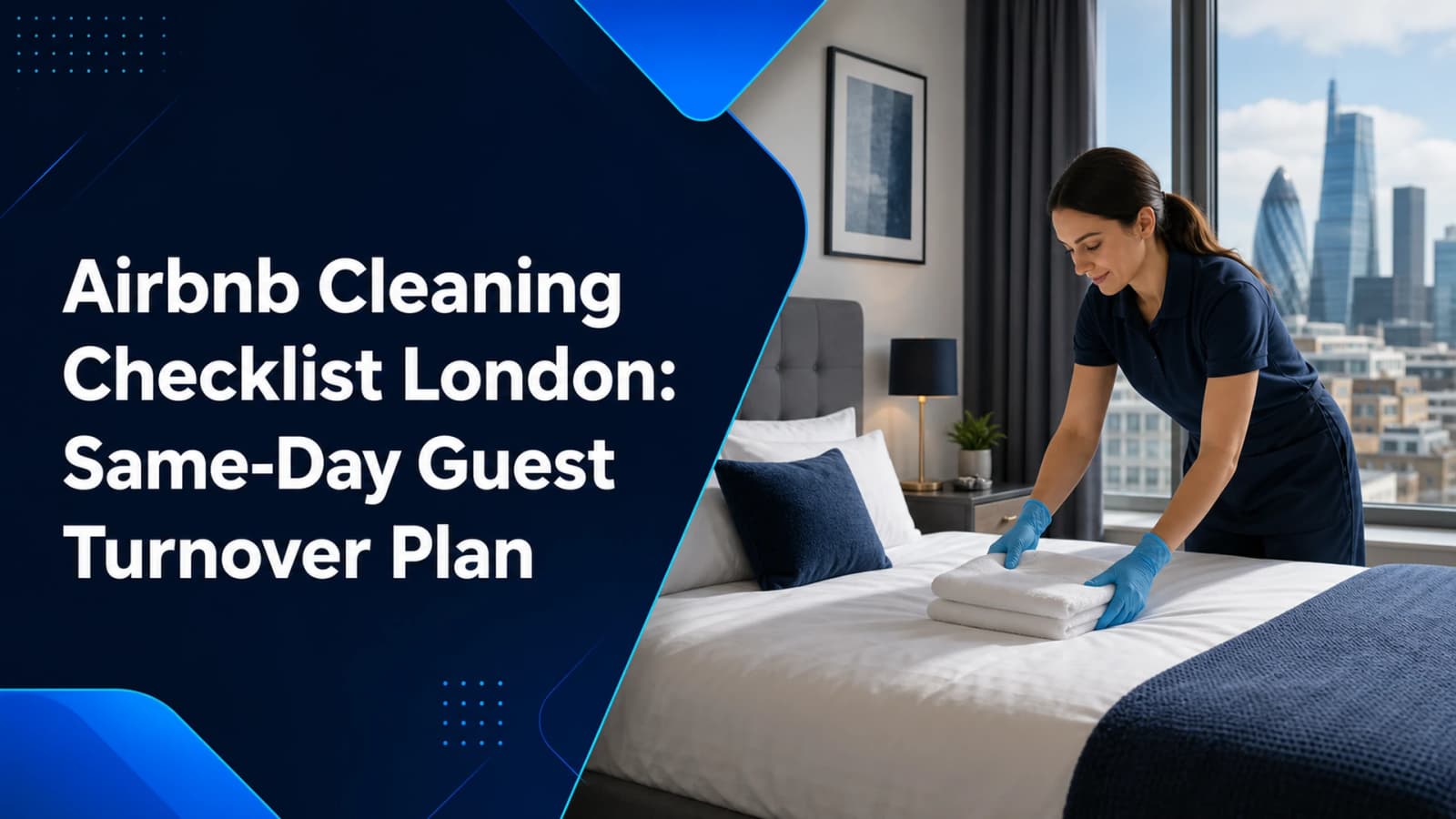
A short-let turnover is a time-sensitive reset between guests. It can combine cleaning with linen, consumable, damage and maintenance checks, but only when those tasks are in scope. See OneGo Cleaning Masters’s Airbnb cleaning service in London and the turnover-cleaning guide for a separate checklist.
Turnover work should have an escalation route for missing keys, late checkout, damaged items or maintenance faults. A cleaner cannot reasonably complete an undefined inventory role within an ordinary domestic-cleaning slot.
Same-day changeovers
Build a margin between checkout and check-in. Travel, access, laundry, damage reporting and drying can all affect completion.
Occupied long-term homes
Regular and periodic deep cleaning can be planned around residents. Agree privacy, pets, working rooms and possessions before the visit.
Which tasks need a specialist service?
Carpet extraction, upholstery cleaning, delicate curtains, high exterior windows, mould remediation, pest control, hazardous waste and some appliances may need separate training, equipment or risk controls. Ask rather than assuming “deep” includes every surface in the property.
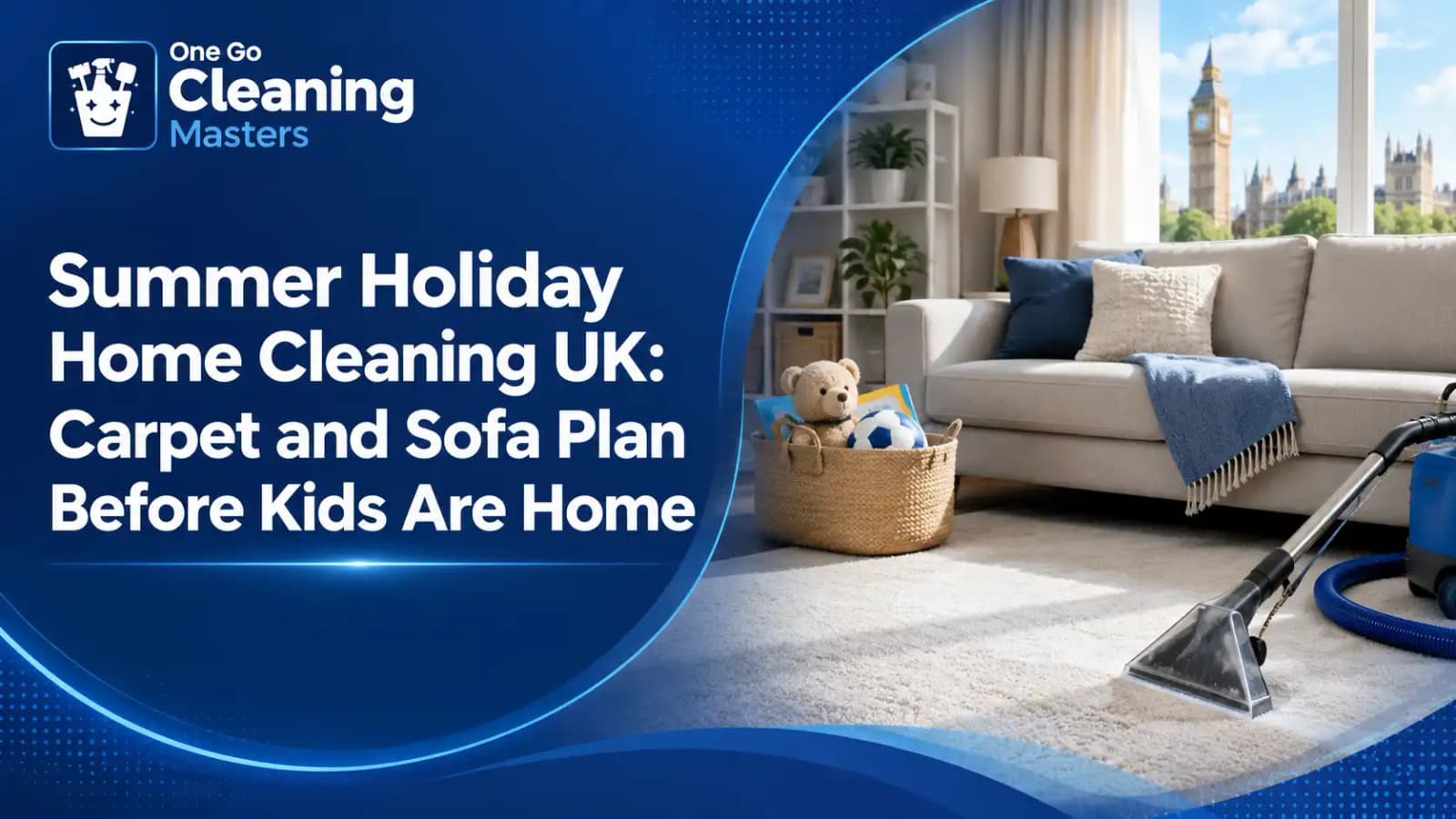
If fabrics are part of the request, use the carpet and upholstery service to describe them separately. A room can be generally clean while a carpet or sofa still needs specialist assessment. Conversely, a cleaned carpet does not mean the full room has received a domestic deep clean.
- Identify delicate, damaged or manufacturer-restricted materials.
- Photograph mould-like growth, sharps or contamination and disclose it.
- Do not ask a routine cleaner to move unsafe heavy items.
- Confirm ladder, height and exterior-access limits.
- Separate repair, pest-control and waste-removal needs from cleaning.
- Record products or processes that occupants cannot tolerate.
How to write a room-by-room cleaning brief
Walk through the property and list outcomes in plain language. Mark essentials, optional tasks and exclusions. Add photographs only where condition or access is difficult to describe. Then send the same brief to each provider so the quotations are comparable.
For deep cleaning vs regular cleaning London decisions, frequency and condition matter more than marketing labels. A well-maintained flat may need a short routine plan and occasional detailed rotation. A neglected or recently renovated flat may need a one-off assessment before a regular schedule starts.
- List every room and specialist item.
- Mark routine tasks, detail tasks and exclusions.
- State occupancy, pets, access and parking.
- Identify products or surfaces needing special care.
- Ask how much time and how many cleaners are proposed.
- Confirm what happens if the actual condition differs from the brief.
Safety and product information to confirm
The Health and Safety Executive’s COSHH guidance for cleaning explains that cleaning chemicals can create health risks when they are poorly selected or handled. A professional provider should follow labels, assess risks and avoid mixing incompatible products.
Tell the provider about children, pets, allergies or sensitivities without asking for a medical guarantee. Arrange safe access, ventilation and drying. Keep products in their original containers and do not combine home chemicals before the visit.
- Products and surfaces requiring manufacturer instructions.
- Ventilation and room-isolation plan.
- Children, pets and vulnerable occupants.
- Safe storage and disposal arrangements.
- Wet-floor, cable and trip-hazard controls.
- A contact who can approve scope changes.
Final thoughts
Choose the task list, not the label. A written room-by-room brief separates routine maintenance, detailed one-off work, tenancy handover and short-let turnover. It also exposes specialist tasks that need their own method and quotation.
For help comparing deep cleaning vs regular cleaning London needs, send the property, room list and priorities through OneGo Cleaning Masters’s contact page. Confirm the scope, timing, exclusions and price before booking.
Frequently asked questions
What is the main difference between deep and regular cleaning?
Regular cleaning maintains an agreed routine. Deep cleaning adds defined detail work, neglected areas or time. The exact scope must be written down.
Does a deep clean include carpet and sofa cleaning?
Not automatically. Specialist carpet or upholstery treatment may be a separate service, so list each item and ask for the method and price.
Is end-of-tenancy cleaning the same as deep cleaning?
No. A tenancy handover should follow the agreement, check-in inventory and property condition. Its scope may differ from a domestic deep clean.
How often should a London flat be deep-cleaned?
There is no universal interval. Occupancy, pets, cooking, ventilation, surface types and the effectiveness of regular cleaning all matter.
How should I compare deep cleaning vs regular cleaning London quotes?
Send every provider the same room-by-room task list and compare included work, time, staffing, specialist exclusions, access assumptions and terms.