 +44 7570 563799Free quote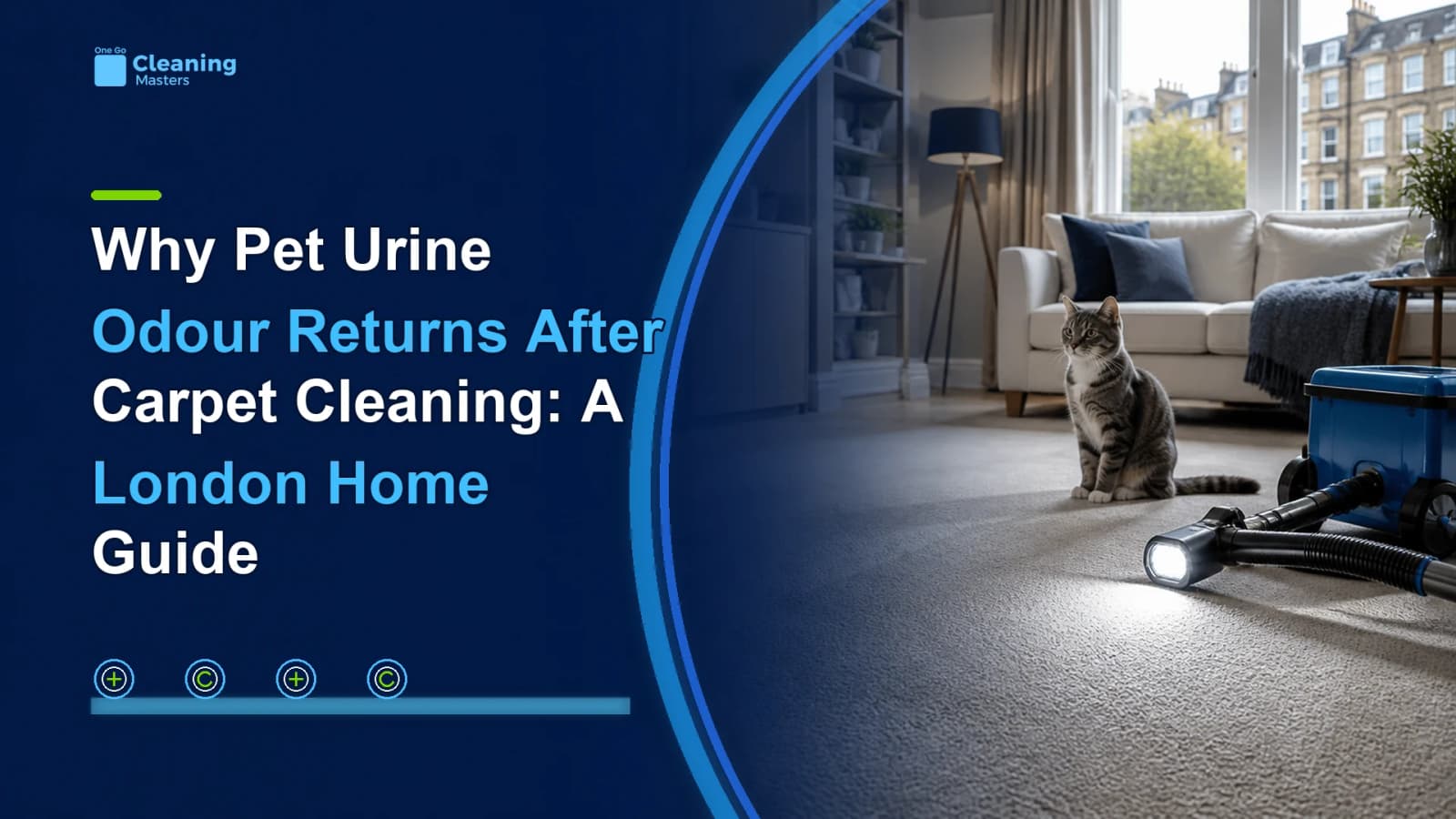
Quick answer
Pet urine odour returns when contamination remains below the cleaned surface, residues become noticeable again with humidity, the wrong product leaves residue, or the pet soils the area again. Carpet, backing, underlay, skirting and subfloor may all need assessment. Cleaning can improve some cases, but no responsible provider should guarantee complete odour or stain removal before inspection.
A carpet can look better immediately after cleaning and smell again later. That does not identify one cause. The original liquid may have reached the backing or underlay, humid conditions may make remaining residues more noticeable, an unsuitable home product may have added residue, or a pet may have returned to the area.
This London guide explains why pet urine odour returns and how to prepare for a professional assessment. It supports OneGo Cleaning Masters’s pet urine carpet-cleaning service without promising removal in every material or property.
Why can pet urine odour return after the surface looks clean?
Liquid moves with gravity and capillary action. A visible mark on the pile may be only part of the affected area. Urine can reach the carpet backing, joins, underlay, gripper edge, skirting or floor beneath. Cleaning only the visible surface may not reach a deeper reservoir.
Warmth and humidity can also change what people notice. Moisture may make remaining compounds more apparent, while fragrance can temporarily mask the source. An honest assessment distinguishes cleaning, odour treatment and possible material replacement rather than covering the area with perfume.
| Possible source | Clue | Assessment question |
|---|---|---|
| Carpet pile | Local surface mark or recent incident | Is the affected area limited and identified? |
| Backing or underlay | Odour returns despite surface improvement | Did liquid soak through or spread? |
| Subfloor or skirting | Persistent odour near an edge or repeated site | Can the underlying material be safely inspected? |
| Product residue | Sticky feel, fragrance or discolouration | What products were previously used? |
| New incident | Fresh dampness or changed boundary | Has the pet returned to the same area? |
Why might a pet return to the same place?
The Cats Protection toileting guidance explains that toileting outside the tray can have health, stress, location, cleanliness or resource-related causes. The charity advises veterinary attention when a cat suddenly changes its toileting behaviour. Similar behaviour questions for other animals should be discussed with a vet or suitable behaviour professional.
Cleaning addresses the material; it does not diagnose the animal. If a pet repeatedly soils indoors, seek veterinary advice and review access to suitable toileting areas. Do not use punishment. Preventing a new incident is essential because even a technically successful clean cannot stop fresh contamination.
- Note whether the behaviour is new or repeated.
- Arrange veterinary advice for sudden or concerning changes.
- Keep litter trays or toileting areas appropriate and accessible.
- Reduce stressors with qualified advice where needed.
- Block access to the cleaned area while it dries.
- Do not rely on strong fragrance to deter the pet.
What should you tell a carpet cleaner?
Disclose the number of affected areas, likely date, pet type, previous incidents and every product already used. Mark the boundary while it is visible and take photographs. If the incident reached a wall edge, doorway or floor joint, mention it because access to underlying material may be limited.
OneGo Cleaning Masters’s broader pet stain and odour service explains the assessment context. The guide to pet odour in rented London homes adds tenancy-planning points. Neither should be used as a promise that a landlord, agent or inventory clerk will accept the result.
- Pet type and number of incidents.
- Approximate dates and marked locations.
- Carpet fibre and manufacturer label, if available.
- Previous sprays, powders, disinfectants or extraction.
- Whether the underlay or subfloor has ever been inspected.
- Any damage, dye change, shrinkage or persistent damp.
Why can DIY products make assessment harder?
An unsuitable product can add fragrance, detergent residue, bleaching, dye change or excess moisture. Mixing household chemicals can be dangerous. More product does not mean more removal, and saturating the carpet can spread contamination into backing or surrounding materials.
Blot a fresh incident according to the carpet manufacturer’s care instructions, keep people and animals away from products, and avoid unlabelled mixtures. If you have already used something, keep the container or photograph its label and tell the cleaner. Never withhold previous treatment because it may affect testing.
Enzyme-labelled products
A product label does not prove suitability for every fibre, dye, backing, pet or situation. Follow the manufacturer instructions and test only where those instructions permit.
Disinfectants and bleach
Do not assume a disinfectant or bleach is safe for carpet. It may damage colour or fibre and should never be mixed with another cleaner.
When might carpet cleaning alone be insufficient?
If contamination has reached an absorbent underlay or subfloor, surface cleaning may not address the full source. In severe or repeated cases, controlled lifting, underlay replacement, floor treatment or other remedial work may need assessment by the appropriate provider. The cleaner should explain which work is inside or outside the quotation.
For the carpet surface itself, review OneGo Cleaning Masters’s London carpet-cleaning service. If the problem includes general musty or non-pet smells, the carpet and upholstery odour guide helps separate source investigation from fragrance. Persistent damp or mould-like growth needs appropriate building or environmental advice.
- Repeated incidents over a large or uncertain area.
- Strong odour at edges, seams or floor junctions.
- Affected underlay, wood, laminate or porous subfloor.
- Visible damage, delamination or colour loss.
- Persistent damp or mould-like growth.
- A material the cleaner cannot safely access or treat.
What result can a professional responsibly promise?
A provider can promise to inspect, explain the proposed process, follow the agreed scope and report limitations. It should not promise complete removal of every stain, odour, bacterium or allergen before seeing the material and extent. Old dye changes or fibre damage may remain even when removable contamination improves.
When pet urine odour returns, ask the cleaner to identify what was treated, what could not be reached and what aftercare is required. Keep the area ventilated as advised and prevent pet access until fully dry. If the smell reappears, record when, where and under which room conditions rather than immediately adding another product.
- Map and photograph every suspected area.
- Share incident and product history.
- Agree the inspection and test process.
- Record accessible and inaccessible materials.
- Follow drying and pet-exclusion instructions.
- Reassess recurring odour before further treatment.
Final thoughts
Recurring odour is a source problem, not simply a fragrance problem. It may involve the pile, backing, underlay, floor, previous products or a new incident. Combine material assessment with appropriate veterinary or behaviour advice when the pet keeps returning to the area.
If pet urine odour returns in your London home, send OneGo Cleaning Masters photographs, locations, carpet details and treatment history through the contact page. Confirm access, scope, realistic limitations and price before booking.
Frequently asked questions
Why does pet urine odour return after carpet cleaning?
The source may remain in backing, underlay, subfloor or edges; humidity may make residue more noticeable; a previous product may interfere; or the pet may soil the area again.
Can professional cleaning guarantee complete pet-urine odour removal?
No responsible provider should guarantee every result before inspection. Material, depth, age, previous treatment, access and damage all affect what is achievable.
Should the carpet be lifted to inspect the underlay?
Sometimes deeper inspection may be appropriate, but lifting can create damage or access issues. Ask who is qualified and authorised to do it before proceeding.
Why does my pet keep urinating in the same place?
Health, stress, toileting setup and learned behaviour can contribute. Seek veterinary advice for sudden or repeated changes and use qualified behaviour guidance where needed.
What should I do when pet urine odour returns?
Stop adding products, record the location and conditions, prevent new incidents, disclose previous treatments and request an assessment of carpet, backing and underlying materials.