 +44 7570 563799Free quote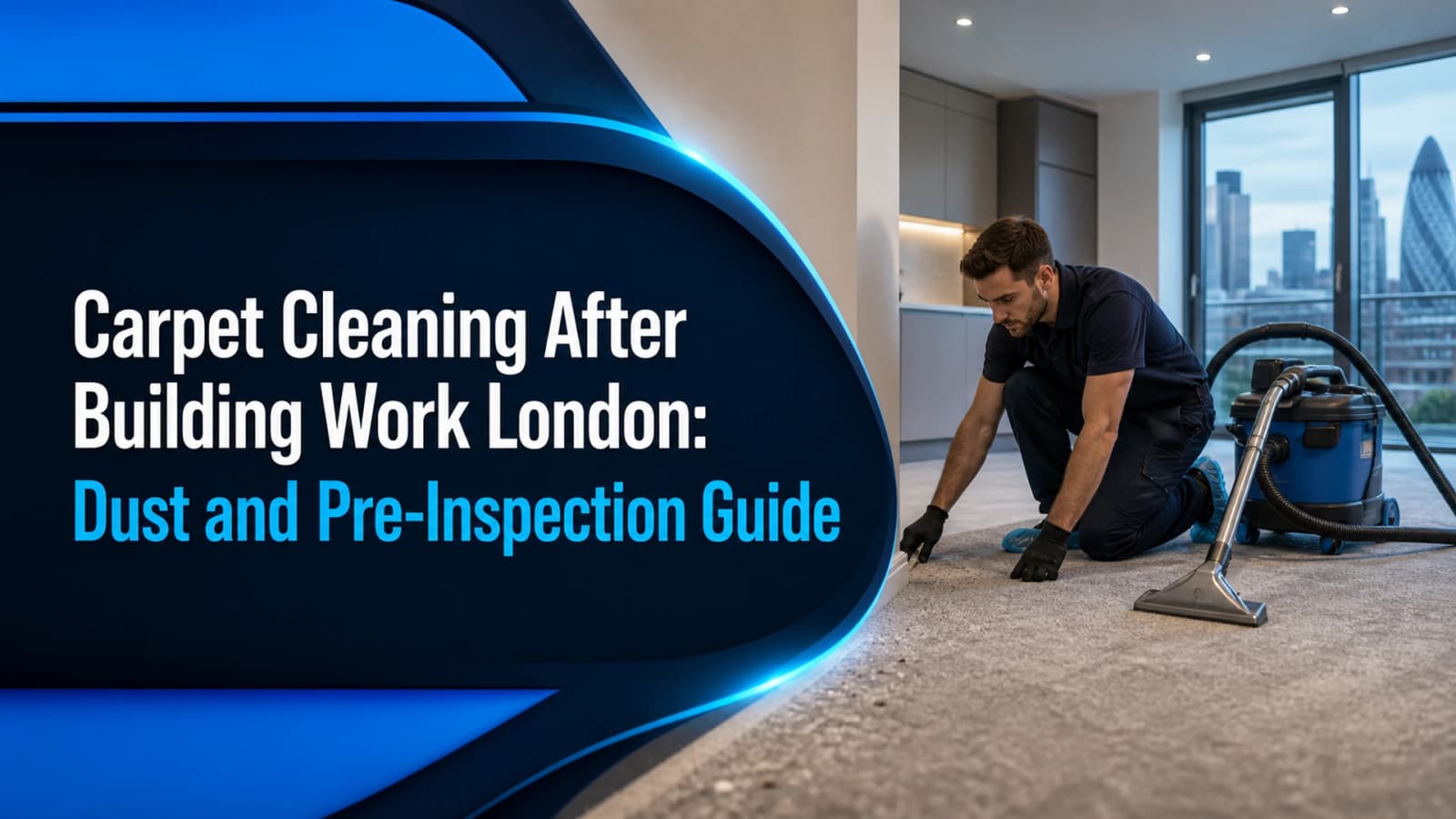
Updated: August 2026 | Author: OneGo Cleaning Masters | Website: OneGo Cleaning Masters
Quick answer
carpet cleaning after building work London should happen only after active trades, uncontrolled dust and wet decorating work have finished. The site needs a contractor handover, safe removal of loose construction debris, carpet inspection and a clearly defined cleaning scope. Professional carpet cleaning is not a substitute for hazardous-dust control or specialist remediation.
Renovation dust can settle into edges, under furniture and along traffic routes. Paint spots, adhesive, plaster, soot and ordinary tracked soil are different problems, so a single “deep clean” label is not enough. The cleaner needs to know what work occurred and whether the area is safe to enter.
This article is for normal post-project cleaning in London homes and offices. It does not cover asbestos, lead, silica control, mould remediation, biohazards or an active construction site. Those risks require the dutyholder and competent specialists to act first.
Finish the Building Work Before Booking Carpet Cleaning
Schedule carpet cleaning after sanding, drilling, cutting, plastering and most decorating have ended. If trades return immediately afterwards, new dust and spills can undo the work. Ask the main contractor to confirm that the area is handed over, debris is removed and services are safe.
Keep protective coverings in place until dirty work finishes, but do not trap moisture beneath unsuitable sheeting. Photograph the carpet when coverings are lifted. Record pre-existing wear, paint, adhesive, burns, tears and water marks so they can be discussed before treatment.
- All dusty cutting and sanding complete
- Waste and sharp debris removed
- Wet paint and sealants cured as instructed
- Safe power, water and lighting available
- Carpet condition photographed at handover
Treat Construction Dust as a Safety Question First
The UK Health and Safety Executive explains that construction dust can damage health and that dry sweeping can create high dust levels. Its guidance on sweeping and cleaning advises planning and suitable controls rather than pushing dust back into the air.
A carpet cleaner should not be asked to enter while hazardous dust is uncontrolled. The contractor or dutyholder must identify materials and complete the required risk controls. If the dust type is unknown, pause and obtain competent advice. Ordinary domestic equipment should not be used as a substitute for task-specific control.
What a Pre-Inspection Should Record
The survey should identify carpet fibre, construction, age where known, dust distribution, edge contamination, individual spills, damp areas and physical damage. It should also note rooms that were sealed off and any previous cleaning products.
Ask whether the proposed service includes only carpet or also hard floors, upholstery, stairs and common areas. OneGo Cleaning Masters’s services overview and contact page can be used to define the requested areas without assuming that every specialist task is available.
| Inspection point | Decision it supports |
|---|---|
| Dust source | Whether specialist control is needed |
| Fibre and backing | Suitable cleaning process |
| Paint or adhesive | Separate spot-risk discussion |
| Moisture | Whether work should pause |
| Edges and vents | Scope boundaries |
| Access and parking | Equipment plan and quote |
Dry Soil Removal Comes Before Wet Cleaning
Loose dry material should be dealt with using an appropriate controlled method before moisture is introduced. Wetting a heavy layer of fine dust can create residue or drive material further into the construction. The exact equipment and sequence must match the assessed dust and carpet.
Do not use a household vacuum on material that the contractor has identified as hazardous. The HSE’s construction dust guidance explains why source control and suitable extraction matter. Once the area is safely handed over, the carpet technician can focus on normal fibre cleaning.
Separate Soil, Spots and Permanent Damage
General dust removal, paint spotting and physical repair are not the same service. Dried paint or adhesive may not respond without fibre or colour risk. Plaster can alter texture, while sharp debris may cut pile. Ask for each visible issue to be classified rather than included under a blanket promise.
A responsible quote states which spots will be attempted and what can remain. Testing should happen in a discreet area. Replacement or repair can be the safer decision where a coating has bonded to the fibre or the backing has been damaged.
Coordinate Access in London Flats and Offices
Building managers may require contractor registration, loading reservations, lift protection, proof of insurance or restricted working hours. Share floor level, stairs, lift dimensions and water access before the visit. A long hose route through a public corridor may need approval.
After-hours work can reduce disruption, but noise and security rules still apply. Nominate one site contact with authority to open rooms, identify excluded areas and approve any necessary change after inspection.
- Confirm loading and parking rules
- Book service lifts where required
- Protect shared corridors
- Provide keys or supervised access
- Identify alarm and lock-up responsibility
- Agree waste-water and equipment routes
Create a Practical Handover and Drying Plan
The cleaned area needs ventilation, controlled access and enough time before furniture or staff return. Drying varies, so do not arrange a tightly fixed reopening based on a generic promise. Keep trades from walking through damp carpet and avoid replacing protective film without professional advice.
The related carpet cleaning time guide and cleaning process guide provide further planning context. The live inspection remains the deciding factor.
- Final trade handover confirmed
- Hazardous dust question closed
- Loose soil control completed
- Spots and damage recorded
- Access and scope signed off
- Drying and reopening plan agreed
- Post-clean photographs saved
Keep a Defect List Separate From the Cleaning Sign-Off
The project manager should maintain a short list of items that cleaning cannot resolve, such as cut pile, paint-bonded fibres, damaged thresholds, damp underlay or incomplete decorating. Assign each defect to the contractor, landlord, insurer or repair specialist who owns the next decision. This prevents a carpet-cleaning invoice from being treated as proof that all building defects were corrected.
Complete the handover in consistent light and compare it with the pre-clean photographs. Record treated rooms, excluded areas, access problems and any recommended follow-up. If occupants return later, tell them which areas remain restricted and who to contact. A clear record is particularly useful for managed blocks, tenancies and multi-contractor refurbishments.
Frequently asked questions
When should carpet cleaning happen after building work?
After active dusty work, wet decorating and debris removal are complete, and the contractor has handed over a safe area.
Can a carpet cleaner remove construction dust?
Normal post-project soil may be addressed after inspection, but uncontrolled or hazardous construction dust needs appropriate dutyholder controls first.
Should plaster dust be vacuumed before wet cleaning?
Dry soil removal normally precedes wet cleaning, but the equipment and method must suit the identified material and risk.
Will carpet cleaning remove dried paint or adhesive?
Not necessarily. These marks may require separate testing and can be permanent where the fibre, dye or backing has changed.
Can cleaning start while decorators are still working?
It is usually better to wait until dirty work is complete. Returning trades can create new dust, spills and traffic on damp carpet.
What details are needed for a London post-building quote?
Share the project type, dust source, rooms, carpet details, visible spots, access, parking, floor level, handover status and reopening needs.
Post-building carpet cleaning checklist
Carpet cleaning after building work London is a handover stage, not a substitute for construction safety controls. Close out active dust risks, document the carpet and agree the cleaning and drying scope before work starts.
Request an inspection with clear project information. OneGo Cleaning Masters can confirm only the services and outcomes supported by the live carpet, access and site conditions.