Skip to content
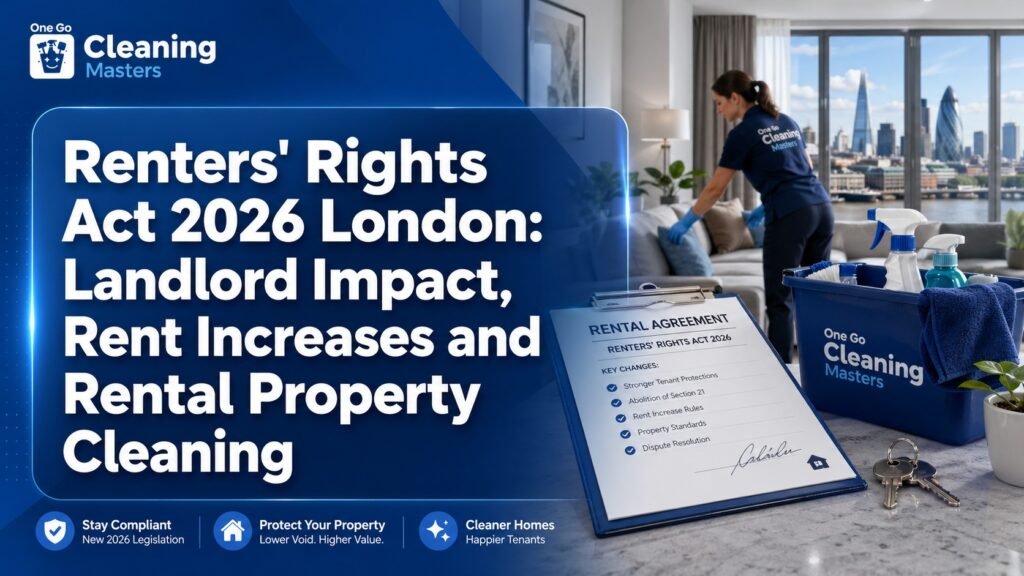
The Renters’ Rights Act 2026 London search trend refers to the Renters’ Rights Act 2025, with major England rental reforms beginning from 1 May 2026.
The Act received Royal Assent on 27 October 2025, and the first major phase applies from 1 May 2026.
It affects landlords, tenants and letting agents across England, including London.
Section 21 “no fault” evictions end from 1 May 2026.
Most assured tenancies move to periodic tenancies.
Rent increases are limited to once per year, not in the first year of a new tenancy, with at least two months’ notice using Form 4A.
Landlords cannot encourage or accept offers above the advertised rent.
Tenants can ask to keep a pet, and landlords must consider the request.
For London landlords, tenants and letting agents, property condition, cleaning records, carpet care, pet odour control and end-of-tenancy presentation now matter even more.
Cleaning cannot guarantee a deposit outcome, but it can support clearer handovers, better inspections and fewer disputes over avoidable marks, stains and odours.
Renters’ Rights Act 2026 London: Why the Search Term Matters
Many people are searching for Renters’ Rights Act 2026 London because the first major phase of the Renters’ Rights Act 2025 begins on 1 May 2026. The legal title is the Renters’ Rights Act 2025, but the practical changes are being felt in 2026 across England, including London’s private rented sector.
London is one of the most active rental markets in the UK. Tenants move between flats, landlords manage multiple properties, and letting agents handle a high volume of inventories, check-ins and check-outs. A law change of this size naturally affects how rented homes are managed, cleaned, inspected and handed back.
For cleaning, the link is practical. When tenancies become more flexible and disputes around rent, pets, condition and possession become more formal, landlords and tenants both need stronger records. Carpets, upholstery, bathrooms, kitchens, mattresses and soft furnishings can become part of inspection discussions, especially when stains, odours, mould marks or heavy wear are visible.
For rental homes that need a proper handover clean, OneGo Cleaning Masters provides end of tenancy cleaning for London rental properties, including flats, houses and managed accommodation.
Main Rental Law Changes Affecting London Landlords and Tenants
The official GOV.UK Renters’ Rights Act guidance explains the wider reform package for England’s private rented sector. The government guidance says the Act changes the experience of private renting, including ending Section 21 “no fault” evictions and introducing a new tenancy system.
| Change | Position from 1 May 2026 | Cleaning and Property Condition Relevance |
|---|---|---|
| Section 21 ends | Landlords need a legal ground for possession | Cleaner records and property condition evidence become more important |
| Periodic tenancies | Fixed-term assured tenancies are removed for most cases | Move-out timing may vary, so flexible cleaning planning matters |
| Rent increases | Once per year, not in the first year of a new tenancy | Better property condition can support fair presentation during tenancy reviews |
| Form 4A notice | At least two months’ notice for rent increases | Documentation culture becomes stronger |
| Rental bidding ban | Landlords cannot accept offers above advertised rent | Pricing and presentation need to be transparent |
| Pets | Tenants can request pets; landlords must consider requests | Pet stain and odour control becomes more relevant |
| Written information | Landlords/agents need to provide required tenancy information | Inventory and cleaning records should be kept clearly |
Rent Increases: What London Landlords Should Prepare For
Under the new rules, a landlord can only increase rent once a year for an assured periodic tenancy and cannot increase rent in the first year of a new tenancy. The landlord must use Form 4A and give the tenant at least two months’ notice.
For London landlords, this means rent reviews will likely need stronger evidence and clearer communication. The government guidance says the increase should be in line with the rent expected if the property were relet on the open market. Tenants can ask the First-tier Tribunal to decide the rent if they believe the increase is above the open-market rate.
Property condition does not replace legal rent-setting rules, but it does influence tenant perception. A clean, well-maintained flat with fresh carpets, clean upholstery, tidy communal areas and hygienic bathrooms will usually feel more fairly managed than a property with visible neglect.
For landlords, cleaning records may also support smoother tenancy management. This can include invoices, dated photos, inventory notes and condition reports before and after cleaning.
Landlord Impact: Cleaning, Inventories and Property Standards
The biggest practical shift for many London landlords is not only legal. It is operational. The rental process is becoming more document-led, and landlords need to be more organised with notices, tenancy information, repair evidence and property condition.
The official information sheet guidance says landlords and agents must provide the Renters’ Rights Act Information Sheet to tenants in certain existing tenancy situations by 31 May 2026, or they could face a fine of up to £7,000.
That same culture of paperwork should extend to cleaning. A landlord or agent should keep:
- Before and after cleaning photos
- Carpet cleaning receipts
- End-of-tenancy cleaning invoices
- Pet stain treatment records
- Inventory notes
- Check-in and check-out cleaning comments
- Any written agreement about pets or professional cleaning expectations
This does not mean tenants can be forced into unfair cleaning costs. It means both sides should have cleaner evidence, clearer expectations and fewer vague arguments.
Why Carpet Cleaning Becomes More Relevant Under the New Renting Rules
Carpets are one of the most common areas of disagreement in rented homes. They show foot traffic, pet stains, food marks, drink spills, furniture marks and odours. In London flats, carpets also deal with wet shoes, public transport residue, dust from busy streets and frequent move-ins.
When a tenancy ends, landlords and tenants often disagree about whether carpet marks are fair wear and tear or cleaning-related damage. Professional cleaning cannot decide that legal question, but it can make the property condition easier to assess.
A carpet that has been professionally cleaned before a new tenancy gives both sides a clearer baseline. If dated photos and an inventory are also used, the condition at move-in is easier to compare with the condition at move-out.
For rental homes with visible marks, odours or high footfall, OneGo Cleaning Masters provides carpet and upholstery cleaning for London homes, flats and rental properties.
Pets, Odours and the Renters’ Rights Act
From 1 May 2026, tenants will be able to ask to keep a pet in the property, and landlords must consider the request and should give a reason if they refuse.
This does not mean every property will automatically become pet-friendly. It does mean pet requests will need to be considered more formally.
For cleaning, pet-related issues may include:
- Urine marks on carpets
- Lingering odours
- Hair trapped in upholstery
- Scratches near doors
- Rug staining
- Mattress or sofa odour
- Flea treatment concerns where relevant
A landlord should not rely on assumptions about pets. A tenant should also understand that pet-related marks or odours may need proper cleaning before handover. For this type of issue, targeted pet stain and odour removal can be more suitable than a general surface clean.
End of Tenancy Cleaning in London After the Act
The Renters’ Rights Act does not remove the need for tenants to return a property in an acceptable condition. It also does not give landlords unlimited rights to charge for cleaning. The condition should usually be judged against the tenancy agreement, inventory, fair wear and tear, and evidence.
For London tenants, a careful end-of-tenancy clean can help avoid avoidable disputes. The most common areas needing attention are:
- Kitchen grease
- Oven marks
- Bathroom limescale
- Shower screens
- Skirting boards
- Window sills
- Carpets and rugs
- Upholstered furniture
- Mattress stains or odours
- Pet-related marks
- Cupboards and wardrobes
- Door handles and switches
For landlords and agents, the cleaner approach is to document the property condition before the tenancy begins and after it ends. A vague claim such as “property left dirty” is weaker than dated photographs, inventory wording and cleaning records.
Cleaning Checklist for London Rental Properties
| Area | Tenant Focus | Landlord / Agent Focus | Cleaning Service Link |
|---|---|---|---|
| Carpeted rooms | Remove visible dirt, stains and odours where possible | Record carpet condition at check-in and check-out | Carpet cleaning |
| Kitchen | Clean grease, oven, hob, cupboards and surfaces | Compare with inventory photos | End-of-tenancy cleaning |
| Bathroom | Limescale, grout, toilet, taps and shower glass | Note mould, ventilation and damage separately | Deep cleaning |
| Upholstery | Reduce food marks, odours and pet hair | Record fabric condition before tenancy | Upholstery cleaning |
| Pet areas | Treat urine marks and odours early | Agree pet terms clearly | Pet stain treatment |
| Entrance and hallway | High footfall and outdoor dirt | Check carpets and walls near doors | Carpet and general cleaning |
| Mattresses | Stains, sweat marks and odours | Confirm whether supplied furnished | Mattress cleaning |
Common Mistakes Landlords and Tenants Should Avoid
Relying on memory instead of records
A rental property should have dated records. Photos, checklists, inventory documents and cleaning receipts make discussions much clearer.
Assuming professional cleaning guarantees a deposit result
A professional clean can support better presentation, but it cannot guarantee a deposit return. Deposit decisions depend on evidence, tenancy terms and fair wear and tear.
Ignoring carpet stains until move-out
Old stains are usually harder to reduce than fresh marks. Pet urine, red wine, coffee and grease can become more difficult if left untreated.
Using strong chemicals on carpets or sofas
The wrong product can bleach colour, damage fibres or leave sticky residue. This is especially risky with wool carpets, delicate rugs and upholstery.
Treating pet odour as a fragrance issue
Air fresheners do not deal with the source of pet odour. Pet urine can reach deeper carpet layers and may need targeted treatment.
Decision Section: Who Needs Cleaning Support Before the Rental Law Changes
Professional cleaning is suitable for:
- Landlords preparing a London rental property for new tenants
- Tenants planning a cleaner handover
- Letting agents managing multiple check-outs
- Airbnb or short-let hosts with frequent guest turnover
- Pet-friendly rented homes
- Flats with old carpet marks or odours
- Furnished properties with sofas, rugs and mattresses
- HMOs and shared rental homes with high foot traffic
Some properties may not need a full service immediately if:
- The property is already professionally cleaned
- Carpets are new and unused
- The tenancy is continuing with no inspection planned
- The landlord and tenant already have clear condition records
- There are no visible stains, odours or hygiene concerns
Related services may be more suitable depending on the issue. A full end-of-tenancy clean is useful for a whole-property handover. Carpet cleaning is more suitable for stained or tired floors. Pet stain treatment is better for urine or odour concerns. Mattress and sofa cleaning may suit furnished lets.
DC Rental Act Searches and UK Renting Law
Some people search for “DC Rental Act”, “DC Rental Housing Act” or “DC rental act vote” while also searching for UK renting updates. These are not the same topic as the Renters’ Rights Act in England.
For London landlords and tenants, the relevant law is the UK Renters’ Rights Act 2025, with major England rental reforms beginning from 1 May 2026. The DC Rental Housing Act relates to Washington, DC in the United States and should not be used as guidance for London rental properties.
For UK cleaning, landlord, tenant and property handover decisions, London property owners should rely on GOV.UK, tenancy deposit bodies, letting agent guidance and their own tenancy documents.
FAQs
When will the Renters’ Rights Act become law in the UK?
The Renters’ Rights Act 2025 already became law after Royal Assent on 27 October 2025. The first major operational phase begins from 1 May 2026 in England. Many people search “Renters’ Rights Act 2026 UK” because that is when key practical changes begin for landlords, tenants and letting agents.
Does the Renters’ Rights Act 2026 London affect end-of-tenancy cleaning?
The Act does not create a new cleaning rule by itself, but it changes the rental environment. London landlords, tenants and agents will likely rely more on clear records, inventories and condition evidence. End-of-tenancy cleaning remains useful where carpets, kitchens, bathrooms, upholstery or pet odours could affect handover discussions.
Can landlords still increase rent under the Renters’ Rights Act?
Yes. Landlords can still increase rent, but for assured periodic tenancies they can only do this once per year, not in the first year of a new tenancy. They must use Form 4A and give at least two months’ notice. Tenants can challenge increases above open-market rent.
Can a landlord charge tenants for carpet cleaning in London?
A landlord should not make unfair or automatic deductions. Any cleaning charge should relate to evidence, tenancy terms, inventory condition, fair wear and tear and actual cleaning need. A professionally cleaned carpet before move-in, supported by dated records, gives both landlord and tenant a clearer condition baseline.
Does the Renters’ Rights Act mean tenants can keep pets in every property?
No. Tenants can ask to keep a pet, and landlords must consider the request and give a reason if refusing. This does not mean every request is automatically approved. For pet-friendly tenancies, landlords and tenants should agree expectations around stains, odours and cleaning in writing.
Is pet stain and odour removal useful for rental properties?
Yes, when pets have caused urine marks, lingering odour, hair build-up or staining on carpets, rugs or upholstery. Standard cleaning may not be enough for deeper odours. Results vary depending on the material, stain age, previous cleaning attempts and whether the issue has reached the underlay.
Will professional cleaning guarantee a tenant’s deposit return?
No. Professional cleaning can improve presentation and reduce avoidable cleaning disputes, but it cannot guarantee a deposit return. Deposit decisions depend on evidence, tenancy terms, fair wear and tear, inventory records and any damage beyond normal use. Tenants should keep receipts and photos after cleaning.
Should landlords clean carpets before a new tenancy?
It is sensible for landlords to clean carpets before a new tenancy if the carpets show marks, odours or heavy use. Clean carpets and dated photos create a clearer baseline for future inspections. This is especially useful in London flats, pet-friendly homes, furnished lets and high-footfall rental properties.
Is the DC Rental Act the same as the Renters’ Rights Act UK?
No. The DC Rental Housing Act relates to Washington, DC in the United States. It is not the same as the UK Renters’ Rights Act 2025. London landlords and tenants should follow England-specific rental guidance, tenancy documents and official UK sources.
What should London landlords confirm before booking rental property cleaning?
Landlords should confirm the service scope, carpet type, stain details, pet odour concerns, access arrangements, parking, estimated drying time and whether before-and-after photos are needed. They should also keep cleaning invoices with inventory records, especially for managed rental homes and end-of-tenancy handovers.
Disclaimer
This blog is for general guidance only. Rental law, implementation dates, landlord duties, rent increase rules and official guidance may change. Cleaning results vary by carpet fibre, fabric condition, stain age, previous treatments, odour depth and property condition. Prices, service availability and cleaning outcomes should be confirmed directly with OneGo Cleaning Masters before booking. This content does not provide legal advice, does not guarantee stain removal, and does not guarantee any deposit, tenancy or inspection outcome.