Skip to content
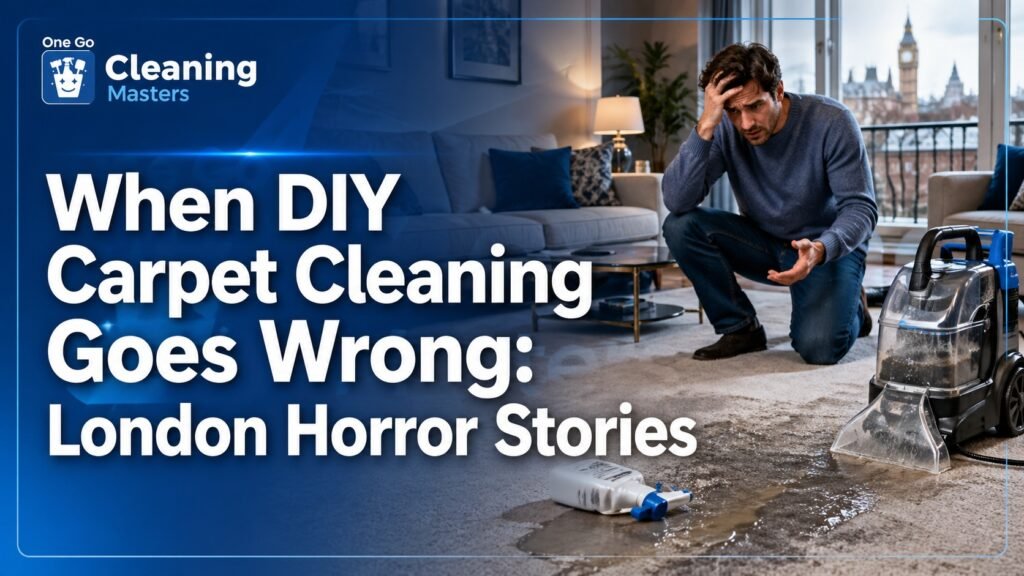
Picture this: you’ve just spent your entire Saturday morning attempting to remove a stubborn wine stain from your beautiful Persian rug, only to discover you’ve created a bleached patch that looks worse than the original spill. Unfortunately, this scenario plays out in countless London homes every week, where well-intentioned homeowners turn minor carpet issues into major disasters through DIY carpet cleaning mistakes. What starts as a cost-saving measure often ends up costing significantly more than hiring professionals from the start.
The rise of online tutorials and readily available cleaning products has emboldened many to tackle carpet cleaning themselves. However, carpets are complex textiles that require specific knowledge about fibres, dyes, and cleaning chemistry. When carpet cleaning goes wrong, the consequences can be devastating – both financially and emotionally, especially when dealing with expensive or sentimental rugs.
Common DIY Carpet Cleaning Mistakes That Lead to Disaster
London carpet cleaning professionals see the same DIY disasters repeatedly. Understanding these common pitfalls can help homeowners make informed decisions about when to call in the experts versus attempting repairs themselves.
Over-Wetting: The Silent Carpet Killer
One of the most frequent and damaging mistakes involves using excessive water during cleaning. Sarah from Kensington learned this the hard way when she hired a carpet cleaning machine and soaked her wool carpet, thinking “more water equals cleaner carpets.” Within 48 hours, her carpet had developed a musty odour, and dark patches began appearing – clear signs of mould growth beneath the surface.
Over-wetting causes several serious problems:
- Mould and mildew growth in carpet backing and underpad
- Carpet shrinkage, particularly with natural fibres
- Delamination, where the carpet backing separates from the pile
- Browning or yellowing as carpet backing materials seep into visible fibres
- Wooden subfloor damage leading to expensive structural repairs
Professional carpet cleaners use moisture meters and controlled extraction techniques to prevent over-wetting, something impossible to replicate with rental equipment.
Chemical Burns and Bleaching Disasters
James from Chelsea thought he could tackle a pet stain with household bleach mixed with carpet shampoo. The result was a perfectly white circle in the middle of his burgundy carpet – a chemical burn that destroyed the dye molecules permanently. This type of damage cannot be reversed through additional cleaning.
Common chemical mistakes include:
- Using bleach-based products on coloured carpets
- Mixing incompatible cleaning chemicals
- Applying acidic solutions to wool carpets
- Using excessive concentrations of cleaning products
- Failing to neutralise alkaline cleaners properly

Colour Bleeding and Dye Migration
Maria’s experience with her antique Turkish rug serves as a cautionary tale about colour bleeding. Using hot water and aggressive scrubbing to remove a food stain, she inadvertently caused the red dyes to migrate into the cream-coloured areas, creating pink halos around every red motif in the pattern.
Colour bleeding typically occurs when:
- Water temperature is too high for the carpet type
- Cleaning solutions are too alkaline
- Carpets haven’t been properly colourfast-tested
- Wet carpets are exposed to heat during drying
- Improper techniques are used on silk or antique fibres
The Real Cost of DIY Carpet Cleaning Gone Wrong
When weighing professional vs DIY carpet cleaning, many homeowners focus solely on the upfront cost difference. However, failed DIY attempts often result in expenses far exceeding professional cleaning fees.
Replacement Costs vs Professional Cleaning Investment
Consider these real London examples:
- Emma’s £3,000 handwoven rug, damaged by over-wetting, required £1,200 in professional restoration work
- David’s entire living room carpet (£2,500 replacement value) was ruined by bleach spots from a £15 DIY cleaning attempt
- Patricia’s silk Persian carpet, valued at £8,000, suffered irreversible dye bleeding from improper cleaning techniques
Professional carpet cleaning typically costs £20-50 per room, while carpet replacement ranges from hundreds to thousands of pounds depending on quality and size.
Hidden Insurance Implications
Many homeowners discover too late that their insurance policies don’t cover damage resulting from DIY cleaning attempts. Most policies classify this as “maintenance negligence” rather than accidental damage, leaving homeowners to bear the full replacement cost.
Furthermore, damaged carpets can impact property values during sales or rental assessments, creating long-term financial consequences beyond immediate replacement costs.

Professional Carpet Damage Restoration: When All Hope Seems Lost
Fortunately, not all DIY disasters result in complete carpet loss. Professional carpet damage repair specialists possess techniques and equipment unavailable to consumers, often salvaging carpets that homeowners assume are beyond saving.
Advanced Salvage Techniques
Professional restoration services employ sophisticated methods to address various types of damage:
For Over-Wetting Damage:
- Industrial dehumidification and air circulation systems
- Anti-microbial treatments to prevent mould growth
- Controlled drying techniques to prevent shrinkage
- Subfloor moisture extraction and treatment
For Chemical Damage:
- pH neutralisation treatments
- Colour restoration using professional dye systems
- Spot weaving or retuft ing for localised damage
- Fibre reconstruction for chemical burns
For Colour Bleeding:
- Dye stabilisation treatments
- Controlled colour extraction techniques
- Professional colour matching and restoration
- Protective treatments to prevent future bleeding
Prevention Through Professional Maintenance
The most effective approach to carpet care combines professional cleaning with proper home maintenance. Professional cleaners provide valuable education about:
- Appropriate spot cleaning techniques for different stain types
- Safe cleaning products for specific carpet materials
- Proper maintenance schedules to prevent deep-set stains
- Early warning signs that require professional intervention
Regular professional cleaning every 12-18 months prevents the accumulation of soil and stains that tempt homeowners into risky DIY adventures.
Learning from London’s Carpet Cleaning Disasters
These horror stories share common themes: underestimating carpet complexity, overconfidence in DIY abilities, and failure to consider long-term consequences. While minor spot cleaning can be safely performed at home with appropriate products and techniques, comprehensive carpet cleaning requires professional expertise.
The chemistry involved in effective carpet cleaning extends far beyond simple soap and water. Professionals understand how different fibres react to various cleaning agents, optimal moisture levels for different carpet constructions, and how to test for colourfastness before proceeding with treatment.
Moreover, professional equipment provides controlled application and extraction impossible to achieve with consumer-grade machines. The combination of knowledge, experience, and proper tools makes professional cleaning not just more effective, but significantly safer for valuable carpets.
When to Attempt DIY vs Professional Cleaning
Safe DIY carpet maintenance includes:
- Immediate blotting of fresh spills
- Regular vacuuming with appropriate settings
- Spot cleaning with carpet-specific products
- Addressing small water-based stains quickly
Professional intervention is essential for:
- Large or set-in stains
- Oil-based or unknown substances
- Overall deep cleaning
- Valuable or antique carpets
- Any situation involving significant moisture
Protecting Your Investment: The Smart Choice
The recurring theme in these DIY carpet cleaning mistakes is that short-term savings often lead to long-term expenses. Professional carpet cleaning represents insurance against costly disasters rather than simply an expense. When you consider the replacement cost of carpets, potential insurance complications, and emotional value of damaged pieces, professional cleaning becomes the economical choice.
London homeowners who invest in regular professional carpet maintenance report longer carpet life, better indoor air quality, and peace of mind knowing their valuable floor coverings receive appropriate care. Rather than risking the disasters described in these horror stories, consider professional carpet cleaning as essential home maintenance – like servicing your boiler or maintaining your roof.
Don’t let your carpet become another cautionary tale. Contact experienced carpet cleaning professionals who understand the complexities of different fibres, possess appropriate equipment, and guarantee their work. Your carpets – and your budget – will thank you.