 +44 7570 563799Free quote
Updated: 22 September 2026 | Website: OneGo Cleaning Masters
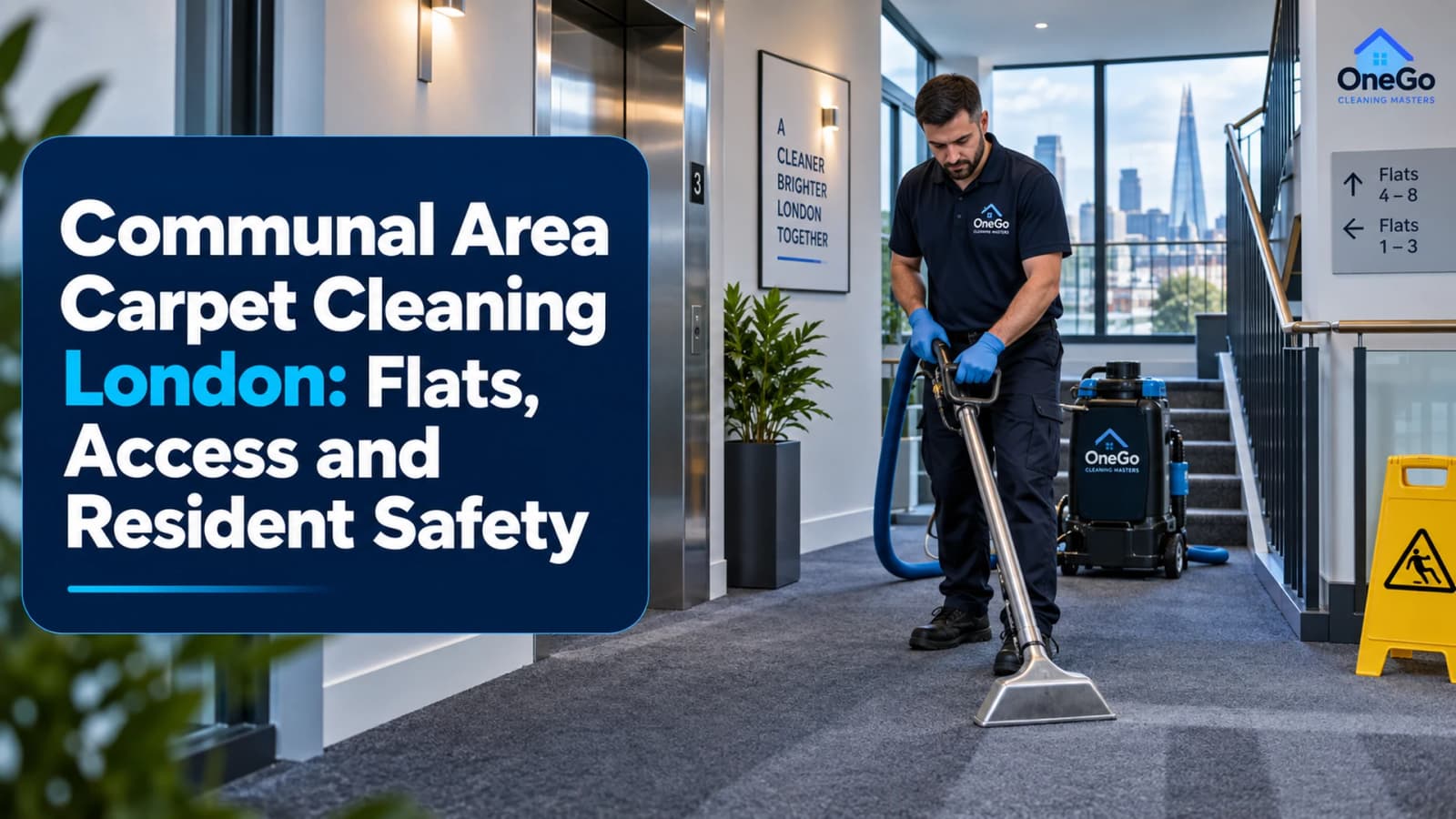
A communal hallway cannot simply close for the afternoon. Residents still need safe access, deliveries continue, and every escape route must remain usable while the carpet is cleaned and dries. This guide explains communal area carpet cleaning London for a London decision, without promising a result before the material and site are checked.
Quick answer: communal area carpet cleaning London
Plan the work by zone, agree who controls the common parts, keep escape routes clear, notify residents, and reopen each section only after it is stable and suitably dry. A site survey should confirm carpet construction, traffic patterns, power, water, parking and any building rules before a method is chosen.
A useful booking starts with evidence. First, record the surface, condition, access and deadline. Next, compare the proposed method with the manufacturer’s guidance. Finally, leave enough time for inspection and drying. OneGo Cleaning Masters’s commercial carpet cleaning service page explains the relevant service scope, while the carpet cleaning in London page gives a broader route for London enquiries.
Who should approve communal carpet cleaning in a block of flats?
The managing agent, freeholder, landlord or residents’ management company should identify the person who controls the common parts. That person should approve access, timing and resident communication. They should also share relevant building hazards and emergency arrangements with the cleaning team. Residents can report practical needs, but the booking contact should make one clear decision. This prevents conflicting instructions on the day. It also creates a record of who approved each zone and reopening time.
How should communal areas be divided into safe cleaning zones?
Map entrances, stairs, landings, lifts, fire doors and alternative routes before equipment arrives. Then divide the carpet into sections that leave a clear passage. Clean the furthest practical zone first and work back towards the exit. However, never wedge open a fire door for hoses or cables. Use the nearest suitable socket, protect cables and keep equipment out of lift lobbies. If no safe route remains, stop and agree a different sequence with the responsible person.
For a related practical example, read the landlord carpet cleaning checklist. It adds context without replacing the specific checks in this guide. clients should confirm live access, fabric and timing details before relying on an older example.
What should a resident notice explain?
A useful notice gives the date, working window, affected floors, alternative route and contact point. It should also explain that timing can change because drying depends on fibre, soil, ventilation and weather. Give enough notice for residents who use mobility aids, carers or deliveries. place a day-of reminder where residents will actually see it. Clear information reduces surprise and discourages people from crossing a wet section.
Which carpet conditions change the method?
A survey should distinguish fitted carpet, carpet tile, entrance matting and stair covering. It should also record loose edges, failed seams, staining, wear lanes and previous repairs. Heavy soil at an entrance may need a different process from a lightly used upper landing. Likewise, an unknown fibre or backing calls for a cautious test. Cleaning cannot repair worn pile, permanent colour loss or a failed adhesive, so the condition record must separate soil from damage.
The GOV.UK guidance for residents in blocks of flats provides the official reference used for the safety or labelling point in this article. Its scope is wider than a cleaning booking, so apply it through the site’s actual responsible person or product instructions.
How should drying and reopening be controlled?
Drying is a managed stage, not an automatic promise. Increase safe ventilation, remove as much moisture as the method allows and keep foot traffic away from treated sections. Check the carpet at edges, joins and shaded landings before reopening. A surface may feel dry while the backing still holds moisture. Therefore, record the final check and tell residents which areas remain restricted. Do not quote one universal drying time without seeing the site.
Where the job crosses another surface or service, the cleaning prices in London page can help frame the enquiry. Also compare the carpet cleaning for stairs for a second internal explanation of planning, condition or drying.
What should the handover record contain?
Record the zones completed, methods used, pre-existing defects, unusual marks and any area left untreated. Add photographs only where the building manager has agreed their use. Note the time each section reopened and any follow-up recommendation. For example, damaged entrance matting may need replacement rather than repeated cleaning. A short, factual handover helps the manager answer resident questions and plan future maintenance.
communal area carpet cleaning London: booking decision table
The best quote is the one that states what will be checked, treated, excluded and reviewed. Use this table to turn a broad enquiry into a clear brief.
| Decision | Check before booking |
|---|---|
| Access | Keys, concierge, lift rules and working hours |
| Safety | Escape routes, fire doors, cables and wet-area control |
| Carpet | Fibre, backing, tiles, seams, wear and prior repairs |
| Drying | Ventilation, resident traffic and staged reopening |
| Handover | Completed zones, exceptions, defects and next review |
How should you compare quotes for communal area carpet cleaning London?
Compare scope and evidence before comparing the total figure. One quote may include inspection, pre-testing, isolated treatments, moving agreed items and a final check. Another may cover only a basic pass over an open area. Therefore, ask each provider to list the measured area or item count, method, access assumptions, likely working window and result limits. Also confirm parking or congestion costs only after the provider has checked the real location. A lower figure is not like-for-like when it omits the difficult parts of the job.
Ask who will make decisions on site and what happens if a test changes the plan. A clear quote should explain whether the team can pause, reduce the scope or recommend another specialist without charging ahead. it should separate cleaning from repair, restoration, pest treatment, mould remediation, electrical work or building drying. This distinction protects the client from buying a service that cannot address the underlying problem. Never rely on an unsupported promise that every mark, smell or colour change will disappear.
What can professional cleaning improve, and what can it not change?
Professional cleaning targets removable soil with a method suited to the assessed material. It may improve appearance, texture and routine cleanliness, depending on condition. However, it cannot replace missing fibres, reverse sun fading, rebuild damaged backing, repair loose fittings or guarantee removal of every stain or odour. Previous chemicals can also limit the result. That is why a pre-condition record matters. It distinguishes an honest cleaning result from a repair expectation that the service never claimed to meet.
After the work, inspect the same areas that appeared in the original photographs. Use normal room lighting, then check again when the material is suitably dry. If an issue remains, describe the location and appearance rather than applying another product immediately. A measured follow-up protects the fabric and gives the provider useful evidence. In addition, keep the invoice, scope and aftercare note so the next maintenance decision starts with facts rather than memory.
Mistakes to avoid before communal area carpet cleaning London
Most preventable problems come from missing information, unsuitable home treatment or an unrealistic timetable. Avoid these common mistakes:
- booking from room count without measuring communal zones
- leaving hoses or cables across an escape route
- using signs without controlling pedestrian access
- promising a fixed drying time before a survey
- treating wear, fading or loose seams as removable soil
Instead, keep the original label or product information, photograph the condition, state every product already used and explain the real deadline. Therefore, the cleaner can test the right area and describe limits before the work expands.
A practical pre-booking checklist
A short written brief protects both the client and the cleaning team. Confirm each item before accepting a date:
- surface or item count and measurements
- manufacturer label, fibre or construction information
- clear photographs of the full area and problem points
- parking, lift, keys, height and equipment access
- children, pets, staff, residents or guests who affect zoning
- previous products, repairs, leaks or specialist treatments
- required reuse time and who will approve the handover
- scope, exclusions, result limits and follow-up process
Frequently asked questions
Can residents walk through communal carpet cleaning areas?
Only after the person managing the work confirms that the route is safe and suitably dry. A staged plan should keep another clear route open where the building layout allows it.
Does communal area carpet cleaning London require resident notice?
A clear notice is good operational practice because residents need to know the affected zones, timings, route changes and contact point. The building manager should choose the notice period.
Can cleaners prop open fire doors for equipment?
No. The work plan should protect the function of fire doors and keep escape routes clear. The building’s responsible person should approve the equipment route.
How long do communal carpets take to dry?
There is no reliable universal time. Fibre, method, ventilation, humidity, soil and traffic all affect drying, so reopen each zone after an on-site check.
Can cleaning repair worn stair carpet?
Cleaning may improve removable soil, but it cannot rebuild worn pile, secure a failed fitting or reverse permanent colour loss. Record defects and refer repairs separately.
What should a property manager send for a quote?
Send floor plans or measurements, access details, photographs, carpet information, problem areas, preferred hours and any building safety rules that affect the job.
Final Thoughts
communal area carpet cleaning London should be planned around the real material, site and user need, not a one-size-fits-all claim. Start with evidence, follow labels and official safety guidance, and leave a realistic inspection window. If you want a condition-led quote, send OneGo Cleaning Masters clear photographs, access details and the result you need. The team can then explain whether its service fits the job and what should happen next.